Red, tender pimples need a different active and application plan from blackheads, post-acne marks, rosacea, or an irritated skin barrier. You will be able to match the gel to your acne pattern, compare its active ingredients and base, apply it safely, and recognise when a dermatologist should review the treatment.
Key takeaways
- Match the gel to inflamed pimples, clogged pores, or both.
- Compare benzoyl peroxide, salicylic acid, and retinoid ingredients by acne pattern.
- Choose a non-comedogenic gel base and patch test before regular use.
- Stop irritating products and seek medical advice for severe or persistent acne.
First identify what the gel is meant to treat
Look at the lesion before choosing the gel. Inflamed pimples are raised, tender red bumps or pus-filled spots, often surrounded by acne redness. A suitable leave-on acne gel will state that it treats inflammatory acne, papules, pustules, or both comedonal and inflammatory acne.
Use the visible pattern to rule out a mismatch:
- Blackheads are open clogged pores with a dark surface; whiteheads are closed, flesh-coloured bumps. A product aimed only at comedones may not control numerous swollen or painful pimples.
- Flat brown or red marks left after spots are post-acne marks, not active acne. A fading gel will not replace an acne treatment when new inflamed pimples keep appearing.
- Itchy, uniform bumps concentrated on the forehead or chest can indicate folliculitis, sometimes called fungal acne. Do not assume every small bump is acne.
- Persistent flushing, burning, visible facial vessels, or eye symptoms point away from ordinary acne and toward rosacea or another condition.
- Stinging, scaling, cracking, or a rash that began after a new product suggests irritation or contact dermatitis. More acne gel can worsen it.
For active inflammatory acne, check whether the formula contains benzoyl peroxide, a topical retinoid, or their fixed combination. A keratolytic-only product may undershoot treatment when swollen lesions persist. Retinoid gels require pregnancy and pregnancy-planning precautions; arrange medical advice before use. Painful nodules, scarring, or rapidly worsening acne need dermatology review rather than repeated product changes.
Compare the active ingredients by acne pattern
Match the active to the lesion, not just the shine on your skin. Oily skin with blackheads needs pore-unclogging treatment; tender, persistent pimples need an acne treatment that reduces inflammation and prevents new lesions.
| Option | Best fit | What to know |
|---|---|---|
| Benzoyl peroxide 2.5% | Red, inflamed pimples and pustules | A strong first-line choice; it can dry skin and bleach fabrics. Pair it with topical clindamycin only when prescribed, never as antibiotic-only treatment. |
| Adapalene 0.1% | Blackheads, whiteheads, oily skin, and recurring acne | A topical retinoid that prevents clogged pores; improvement takes time, and irritation is common at the start. |
| Salicylic acid 0.5% to 2% | Mild clogged pores and surface oil | A comedolytic option for blackheads and whiteheads, but it usually undershoots treatment for persistent inflammatory acne. |
| Azelaic acid | Acne with redness or lingering dark marks | Useful when discoloration accompanies pimples; it is often easier to tolerate than stronger acne actives, though stinging can occur. |
| Niacinamide | Oil control and barrier support | Helpful as a supporting ingredient, not a replacement for a retinoid or benzoyl peroxide when lesions are inflamed. |
For persistent inflammatory acne, adapalene plus benzoyl peroxide addresses both clogged pores and active inflammation. Do not stack every active at once: combining adapalene, benzoyl peroxide, salicylic acid, or an alcohol-rich gel can cause irritant dermatitis and make you abandon treatment. A dermatologist should guide clindamycin use and local prescription requirements.
Read the label and inspect the gel base
A label that says “for oily skin” does not prove that the gel will control acne without irritation. Check the formula and the pack before you buy it or prescribe it.
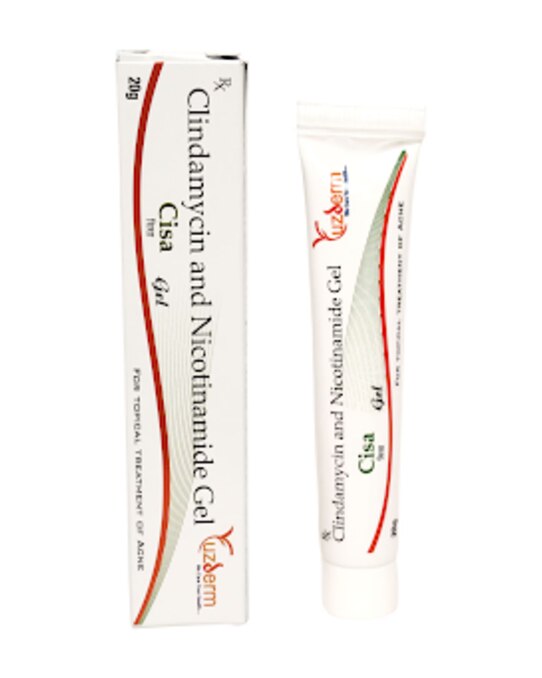
1. Verify the clindamycin concentration and nicotinamide concentration as exact percentages, preferably with the amount per gram and dosage form stated. Do not use topical clindamycin alone as a long-term acne plan; benzoyl peroxide helps reduce selection for antibiotic-resistant Cutibacterium acnes.
2. Read the complete ingredient list. Look for useful supporting ingredients such as glycerin, panthenol, or other barrier-supportive moisturisers, and check whether the formula also contains a retinoid, benzoyl peroxide, or salicylic acid.
Salicylic acid in a US over-the-counter acne gel falls within 0.5% to 2%; a higher number is not automatically better for daily facial use.
3. Treat “fragrance-free” as a practical advantage when redness or stinging is present. Check the gel base for ethanol, alcohol denat., or another alcohol high in the list; rapid drying can conceal barrier damage, especially alongside a retinoid or benzoyl peroxide.
4. Confirm the sealed pack, batch number, expiry date, manufacturer, storage instructions, and authorised seller. For a product from Yuzderm Pharmaceuticals Pvt. Ltd., request the current specification or certificate of analysis for clinic use rather than relying on brand name alone.
If the label includes adapalene or another topical retinoid, check pregnancy and pregnancy-planning warnings before recommending it. Pair an irritating gel with a barrier-compatible moisturiser and sunscreen.
Related product
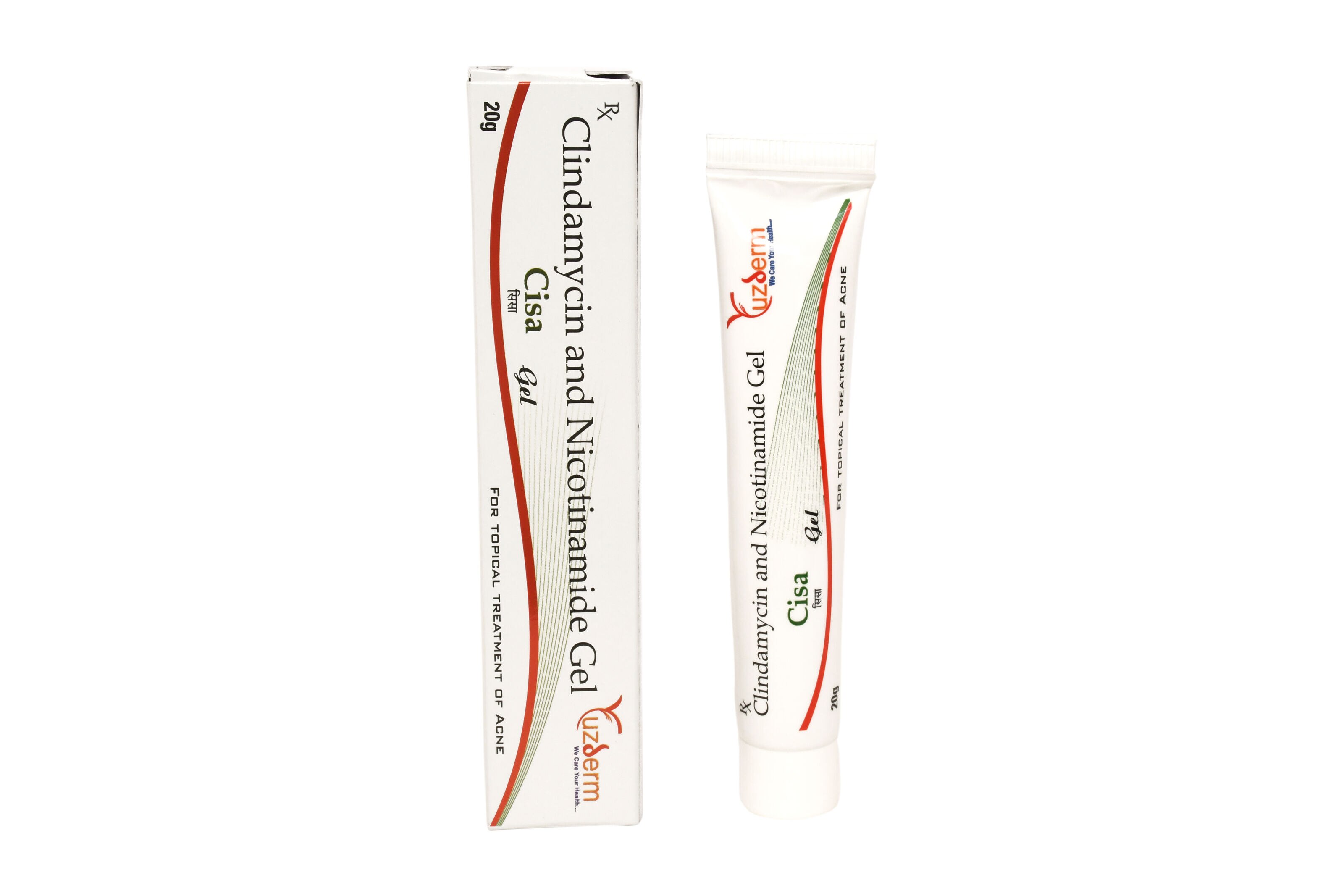 | Skin Care ₹126 Clindamycin: This is a lincosamide antibiotic. It works by inhibiting the protein synthesis of Cutibacterium acnes (the bacteria responsible for... View product → |
Apply enough to treat acne without damaging your skin barrier
Wash with a gentle cleanser, rinse thoroughly, and pat dry before you apply acne gel. Wait until the skin is fully dry; applying a retinoid or benzoyl peroxide to damp skin can increase stinging. Avoid the eyelids, lips, nostril folds, broken skin, and freshly shaved areas.
Choose the application pattern from the gel’s instructions and the acne distribution:
| Option | Amount and area | Best use |
|---|---|---|
| Spot treatment | A thin film on each active pimple | A few isolated lesions when the label permits |
| Full-area treatment | One pea-sized amount spread over the acne-prone zone | Recurrent pimples, blackheads, or whiteheads across the forehead, cheeks, or chin |
A pea-sized amount covers the whole face, not one lesion. Dot it across the forehead, both cheeks, and chin, then spread gently without rubbing. More gel does not work faster; it increases dryness and peeling.
For a full-area retinoid, apply a thin layer rather than treating only visible pimples, because new lesions form in nearby pores.
Start every other night if the product is irritating or contains adapalene, unless your prescriber gives different instructions. Follow with a non-comedogenic moisturizer, and use broad-spectrum sunscreen during the day. If burning, marked redness, swelling, or cracking develops, stop until the skin settles, then restart less often or use short-contact exposure if the label allows.
Do not layer it immediately with another irritating active. Persistent or severe irritation needs a treatment review.
Set a review point and know when medical supervision is needed
A gel is not failing after three days. Judge improvement over 8 to 12 weeks, with a formal treatment review at about 12 weeks. Fewer new inflamed pimples and less oiliness are useful early signs; marks and uneven texture take longer to fade.
Early worsening with adapalene or another topical retinoid can mean increased dryness, stinging, peeling, or previously hidden comedones surfacing. Do not respond by applying more. Keep the active at a tolerable schedule, such as every other night, and use a barrier-compatible moisturizer; short-contact use can help when irritation is limiting treatment.
Stop increasing use and arrange an earlier medical review if you develop:
- Severe burning, swelling, blistering, or a spreading rash
- Rapidly worsening acne, painful nodules, or new scarring
- Irritation that prevents normal washing, moisturizing, or sleep
- No meaningful improvement after 8 to 12 weeks
A treatment review can identify the wrong diagnosis, an insufficient active, or the need for prescription care. Topical clindamycin should not be used alone; combining it with benzoyl peroxide helps reduce antibiotic resistance.
Follow local prescribing advice, and observe pregnancy precautions: avoid topical retinoids when pregnant or planning pregnancy, and ask a clinician before continuing any acne gel during pregnancy.
Frequently asked questions
How do you identify the right acne gel for your pimples?
Check whether the gel treats inflammatory acne, papules, pustules, comedonal acne, or both. Match that claim to the lesions you have.
Which active ingredients suit different acne patterns?
Compare ingredients such as benzoyl peroxide, salicylic acid, and topical retinoids according to whether you have inflamed pimples, clogged pores, or both.
How should you read an acne gel label?
Check the active ingredient and concentration, directions, warnings, expiry date, batch number, and whether the gel base is non-comedogenic and suitable for your skin.
How can you apply acne gel without damaging your skin barrier?
Apply a thin layer to clean, dry acne-prone skin, start at a tolerable frequency, moisturise, and reduce use if burning, cracking, or persistent peeling develops.
When should you seek medical supervision for acne?
Seek medical advice for deep painful nodules, scarring, widespread acne, severe irritation, or acne that does not improve after a planned review period.