Collagen production slows after early adulthood, while ultraviolet exposure, altered elastin, glycation, and changes in skin structure make wrinkles deeper and elasticity poorer. You will learn how to judge these changes, compare collagen products, use vitamin C safely, and build a routine that addresses prevention as well as visible ageing.
Key takeaways
- Collagen production declines with age, but wrinkles involve more than collagen loss.
- Treat sunscreen as the foundation of any wrinkle and elasticity routine.
- Collagen supplements may offer modest skin benefits, not a reversal of ageing.
- Use topical vitamin C consistently and protect it from light and air.
Why ageing skin makes less effective collagen
Ageing alters both the amount and the performance of dermal collagen. Collagen production declines by about 1% per year after early adulthood; in one human study, fibroblast collagen synthesis in women aged 80–89 was about 68% lower than in women aged 18–29.
Inside the ageing dermis, three linked changes weaken its support structure:
- Fibroblast activity slows, so fibroblasts produce less new collagen and respond less effectively to signals from the surrounding matrix.
- Collagen fragmentation increases. Matrix metalloproteinases, including MMP-1, cut existing type I collagen into shorter pieces that provide poorer mechanical support and weaker cell-matrix signalling.
- Glycation creates advanced glycation end products, or AGEs, that cross-link collagen. These bonds make collagen stiffer, less soluble, and harder for enzymes to remove and rebuild.
The damaged scaffold then reinforces the problem: fibroblasts resting on fragmented collagen become less productive, so stimulating collagen synthesis alone may not restore a healthy dermal matrix while breakdown continues. Ultraviolet exposure accelerates this cycle by strongly increasing MMP-1, whereas intrinsic ageing is driven mainly by slower synthesis and greater fragmentation.
Menopausal oestrogen loss can add a faster period of collagen loss, so age and menopause are not interchangeable causes.
Collagen is only one part of skin elasticity and wrinkles
A wrinkle can deepen even when collagen loss is not the only change: the skin’s water, elastic fibres, thickness, fat support, and sugar-related cross-links all alter its shape.
Beyond collagen, these changes matter:
- Elastin turns over slowly. Ageing and ultraviolet exposure leave abnormal, poorly organised elastic material, called solar elastosis, so skin recoils poorly instead of springing back.
- Hyaluronic acid declines, reducing water retention and plumpness; dehydration makes fine lines look sharper.
- Skin thickness decreases with intrinsic ageing, producing thinner, more fragile-looking skin where creases show readily.
- Subcutaneous fat can shrink, shift, or redistribute. Loss beneath the eyes or cheeks creates hollows, while downward movement deepens folds.
- Glycation binds sugars to collagen and elastin, making fibres stiffer and less functional rather than simply reducing their amount.
- Menopause changes the pace: estrogen loss can accelerate dermal collagen loss early after menopause, so age and menopause are not interchangeable.
- Ultraviolet exposure activates matrix metalloproteinases, disrupts collagen bundles, and builds solar elastosis. Photoaged skin is therefore disorganised, not merely thinner.
Two people with similar collagen measurements can therefore show different wrinkles. A claim that an ingredient increases elastin-associated protein expression does not prove restoration of functional elastic fibres.
What collagen supplements can realistically change
Visible improvement, when it occurs, takes weeks rather than days. Trials of oral collagen peptides report modest changes in skin hydration, elasticity, or wrinkle measurements after roughly 8 to 12 weeks, with results varying by formulation, dose, study design, and participant age. These findings support a possible benefit, not a guaranteed reversal of wrinkles.
Hydrolysed collagen is broken into peptides and amino acids during digestion. It should not be described as travelling intact to the dermis and turning directly into new human collagen. It also does not replace sun protection: ultraviolet exposure increases MMP-1, the enzyme that initiates breakdown of Type I collagen.
Compare a product on evidence and label detail, not on collagen type alone.
| Feature | What to check | What it does not prove |
|---|---|---|
| Hydrolysed collagen | The source and exact peptide amount per serving | That intact collagen reaches skin |
| Type I and Type III | Whether the label names the types clearly | That the product reduces wrinkles |
| Serving amount | Whether it matches amounts used in human studies | That a larger dose works better |
| Human evidence | A trial on the same formula, dose, and duration | That results apply to every collagen product |
| Source and testing | Fish, bovine, or other source; allergen and quality information | That “marine” means more effective |
For a product such as AgeDrop from Yuzderm Pharmaceuticals Pvt. Ltd., use those checks before treating its Type I and III label as proof of wrinkle reduction. Assess photographs and texture only after consistent use for at least two to three months.
Related products
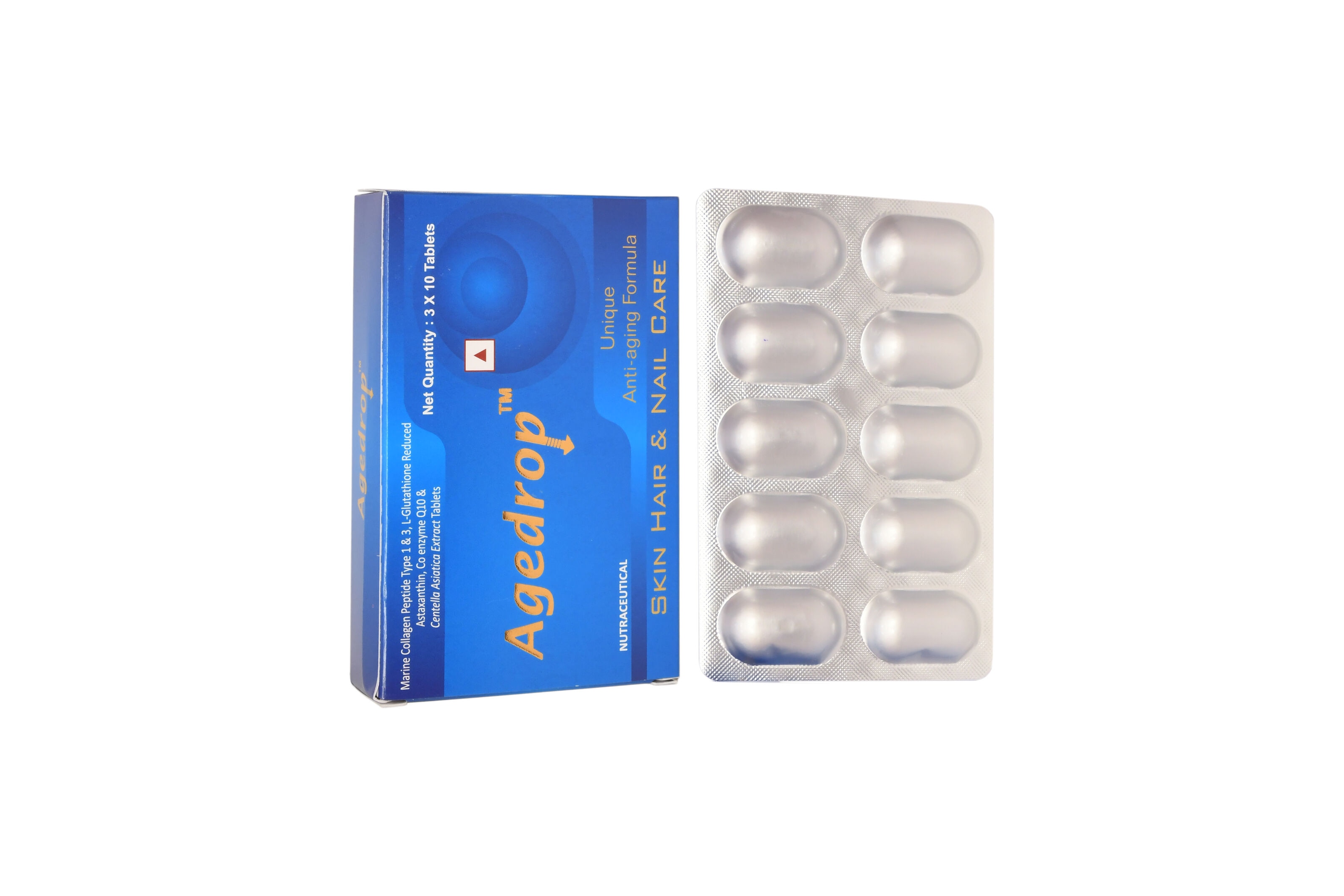 | Tablet ₹618 Marine Collagen Peptide (Type 1 & 3): These are proteins sourced from fish. View product → |
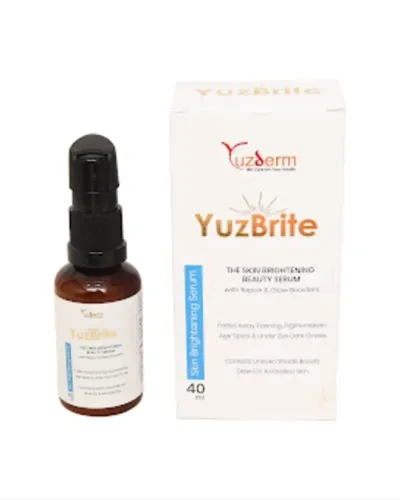
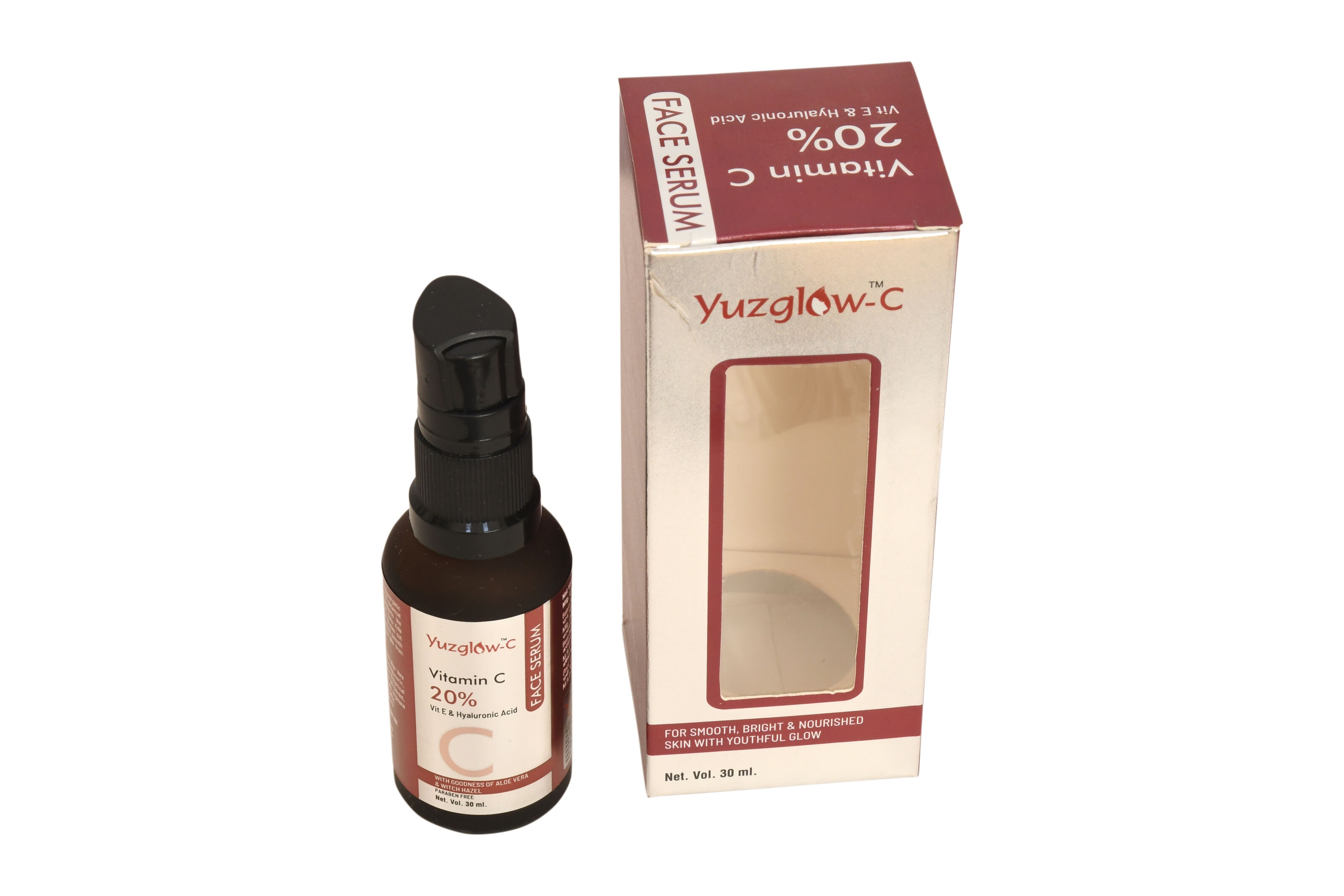 | Skin Care ₹1330 Vitamin C (20%): A high concentration used for brightening the complexion, reducing hyperpigmentation, and stimulating collagen production. View product → |
How to use vitamin C when collagen support is the goal
A 20% vitamin C serum supports collagen formation at the skin site, while oral hydrolysed collagen is digested before absorption. L-ascorbic acid acts as a cofactor for prolyl hydroxylation and lysyl hydroxylation, steps that help newly made collagen fold and stabilise correctly.
Oral peptides provide amino acids and may send fibroblast-related signals, but they do not travel intact to the dermis and become human collagen.
Use a 20% serum this way:
1. Patch-test it on the jaw or forearm for 24 hours. Apply two or three drops to clean, completely dry facial skin twice weekly for two weeks; increase to alternate mornings, then daily only if stinging and redness stay mild.
2. Follow with moisturiser, and apply broad-spectrum sunscreen every morning. Do not start the serum in the same routine as an exfoliating acid or retinoid; alternating nights reduces an avoidable irritation stack.
3. Choose an opaque, airtight bottle and store it away from heat and sunlight. L-ascorbic acid is oxidation-prone: discard the serum if it turns distinctly dark yellow, orange, or brown.
Acidic formulas around pH 3–4 improve penetration but also explain the sting and dryness associated with 20% products. Stop if you develop persistent burning, swelling, rash, or peeling; restarting at a lower concentration is more useful than forcing daily application.
Topical vitamin C supports a formation step, not a guarantee of increased mature, mechanically strong collagen.
Build a wrinkle and elasticity routine around proven priorities
Put ultraviolet protection first: apply a broad-spectrum sunscreen labelled SPF 30 or higher every morning to the face, neck, ears, and hands. Reapply every two hours outdoors, after swimming, or after heavy sweating. This limits ultraviolet-driven collagen breakdown; daily use reduced photoaging progression by about 24% over 4.5 years in a randomized trial.
Build the rest of the routine around these priorities:
- Use a retinoid at night. Prescription all-trans retinoic acid has the strongest evidence for stimulating procollagen and reducing ultraviolet-induced matrix metalloproteinases. Start two nights weekly with a pea-sized amount, moisturise, and increase gradually; irritation is the usual reason people stop.
- Add vitamin C in the morning if your skin tolerates it. A 10–20% L-ascorbic acid serum supports collagen-forming reactions, but oxidation and stinging limit its value when the product is poorly packaged or used too aggressively.
- Avoid tanning and smoking, which add preventable oxidative and ultraviolet stress. Protect exposed skin with clothing and sunglasses.
- Treat oral hydrolysed collagen as optional. Studies report modest changes in hydration, elasticity, or wrinkles after several weeks to months, not a reliable replacement for sunscreen or retinoids.
| Option | Main role | When to expect visible change |
|---|---|---|
| Sunscreen | Limits ongoing photoaging | Benefit accumulates over years |
| Retinoids | Stimulate collagen and improve texture | About 8–12 weeks; stronger results after 3–6 months |
| Vitamin C | Supports collagen synthesis and brightness | About 8–12 weeks |
| Collagen peptides | Modest hydration or elasticity support | About 8–12 weeks or longer |
Frequently asked questions
Why does ageing skin make less effective collagen?
Collagen production declines with age as fibroblast activity falls. Existing collagen also becomes more fragmented and less efficiently organised, reducing dermal support.
Is collagen the only factor behind skin elasticity and wrinkles?
No. Elastin, hyaluronic acid, water content, glycation, sun damage, repeated facial movement, and changes in skin thickness also affect elasticity and wrinkles.
What can collagen supplements realistically change?
Collagen supplements may modestly improve skin hydration and the appearance of fine lines after consistent use, but they cannot restore youthful collagen levels or replace sun protection.
How should you use vitamin C for collagen support?
Apply a stable topical vitamin C product to clean, dry skin as directed, store it away from heat and light, and use sunscreen every morning.
What are the proven priorities in a wrinkle and elasticity routine?
Use broad-spectrum sunscreen daily, moisturise, avoid smoking, consider a tolerated retinoid, and maintain consistency before adding supplements or other treatments.