Dark spots can reflect different processes, from post-acne inflammation and sun exposure to melasma or a deeper pigment disorder, so one brightening ingredient cannot suit every mark. By the end, you will know how to identify the concern, compare active ingredients and formulas, build a tolerable routine, and recognise when pigmentation needs professional assessment.
Key takeaways
- Identify whether discoloration comes from pigment, blood vessels, or facial shadows.
- Choose ingredients based on your skin type, sensitivity, and the type of dark spot.
- Apply sunscreen daily because ultraviolet exposure can maintain excess pigmentation.
- Stop an irritating serum; persistent or changing spots need professional diagnosis.
What kind of discoloration are you trying to treat?
Start by identifying whether the colour is pigment, blood-vessel colour, or shadow. “Uneven skin tone” is an umbrella term; a serum that reduces excess melanin will not correct every cause.
| Concern | What it means | What to look for |
|---|---|---|
| Dark spots | Individual brown or grey marks, including solar lentigines and some drug-induced pigmentation | Localised excess melanin; deeper pigment fades more slowly |
| Tanning | Broad, fairly even darkening after ultraviolet exposure | Diffuse pigment across exposed skin, not separate spots |
| Melasma | Usually symmetrical brown or grey-brown patches on the cheeks, forehead, nose, or upper lip | Hormonal and light-sensitive pigmentation that often returns; it can involve epidermal and dermal pigment |
| Post-acne marks | Post-inflammatory hyperpigmentation (PIH) left after a spot, wound, or irritation | Brown marks indicate melanin; pink or red marks indicate lingering inflammation or vessels |
| Redness | Pink or red colour from irritation, acne, rosacea, or visible blood vessels | It is not excess melanin, so a pigment-focused serum may not address it |
| Under-eye shadows | Darkness caused by thin skin, visible vessels, hollows, swelling, or inherited structure | The colour may be optical or vascular rather than pigment |
A brown mark that follows acne is usually PIH, while a changing, asymmetric, bleeding, painful, or unexplained spot needs medical assessment rather than cosmetic treatment. Dermal pigment generally responds more slowly and less completely than pigment near the surface.
How brightening ingredients affect excess pigment
Tyrosinase inhibition, reduced melanosome transfer, faster epidermal turnover, and inflammation control are the main routes to less visible pigment. Epidermal post inflammatory hyperpigmentation and tanning usually respond better than dermal melanin, which fades slowly and may remain incomplete.
| Ingredient | Strongest rationale | Important limitation |
|---|---|---|
| Vitamin C | Antioxidant support and reduced melanin formation; useful for sun related uneven tone | L ascorbic acid needs low pH and protection from air, light, heat, and water; yellow brown serum suggests oxidation |
| Niacinamide | Reduces transfer of melanosomes to keratinocytes; useful for uneven tone and post acne marks | Results depend on consistent use and a tolerable finished formula |
| Azelaic acid | Anti inflammatory and antimelanogenic; a strong fit for post inflammatory marks with acne or rosacea | Dermatologic strengths are commonly 15 to 20%; burning, stinging, and dryness can reduce adherence |
| Kojic acid | Tyrosinase inhibition for localized epidermal spots | Irritant or allergic contact dermatitis and oxidation can limit use; laboratory activity does not prove clinical improvement |
| Retinoids | Increase cell turnover and support pigment reduction, including some sun induced spots | Irritation can create more post inflammatory pigmentation |
| Alpha arbutin or liquorice extract | Tyrosinase pathway support for mild uneven tone | Evidence varies by extract, concentration, vehicle, and stability |
| Tranexamic acid | Useful rationale for melasma, particularly when inflammation and vascular signaling contribute | Persistent or recurrent melasma needs a broader treatment plan |
A brightening claim does not make an unexplained, changing, asymmetric, bleeding, or painful lesion safe to treat cosmetically. Melanoma and lentigo maligna can resemble ordinary spots; seek examination instead of applying serum.
How to match an active to your skin and use it safely
Choose the least irritating active that fits your discoloration, skin sensitivity, and current routine—not the strongest label. A changing, asymmetric, bleeding, itching, or painful spot needs examination before brightening treatment; melanoma and lentigo maligna can resemble ordinary marks.
| Option | Best fit | Main caution |
|---|---|---|
| Alpha-arbutin | Gradual treatment of uneven tone and post-acne marks | Irritation, allergy, and formula instability can occur |
| Liquorice extract | Sensitive skin needing a gentler pigment-supporting option | Results depend on the extract and finished formula |
| Tranexamic acid | Persistent uneven tone or melasma-support routines | Do not treat it as a substitute for diagnosis or sunscreen |
| Retinoids | Texture, acne-related marks, and turnover support | Dermatitis can worsen post-inflammatory hyperpigmentation |
| Azelaic acid | Marks with acne or redness | Stinging and dryness can limit use |
Introduce one new active at a time, using it on dry skin two or three nights weekly for two weeks. Increase frequency only when there is no persistent burning, swelling, cracking, or next-day redness.
- Pair one primary brightener with a bland moisturiser before adding another active.
- Avoid stacking retinoids with exfoliating acids, abrasive scrubs, or fragranced products during the introduction phase.
- If irritation appears, stop the newest product, moisturise, and restart less often only after the skin settles.
- Avoid topical retinoids during pregnancy unless your clinician specifically advises otherwise; ask about alternatives such as alpha-arbutin, liquorice extract, or tranexamic acid.
Judge the finished formula by tolerability, not by the ingredient list alone. Repeated inflammation can create new pigment and erase the benefit of an otherwise sensible routine.
What to compare before buying a brightening serum
A higher serum concentration is not automatically a better buy. Compare the active form, finished formula, container, and evidence of stability together; a strong product that oxidises or irritates you will deliver less than a milder serum you use consistently.
| Option | What to compare | What it means |
|---|---|---|
| L-ascorbic acid | Serum concentration and pH | Usually needs a low-pH system; higher percentages increase sting and do not guarantee better results. |
| Vitamin C derivatives | Named derivative and supporting evidence | They are often easier to stabilise, but do not assume equivalent clinical evidence to L-ascorbic acid. |
| Opaque airless pump | Protection from light, air, and repeated handling | Better limits oxidation than a clear jar or frequently opened dropper bottle. |
| Colour and date | Fresh appearance, batch number, expiry, and storage instructions | Yellow-to-brown darkening can indicate oxidation and reduced active content. |
Read the full ingredient list, not just the front label. Look for the vitamin C form, preservatives, fragrance, acids, and the product’s stated pH; formulation stability depends on their combined system, not on the headline percentage alone. Water exposure, heat, sunlight, and a loose cap can shorten useful life.
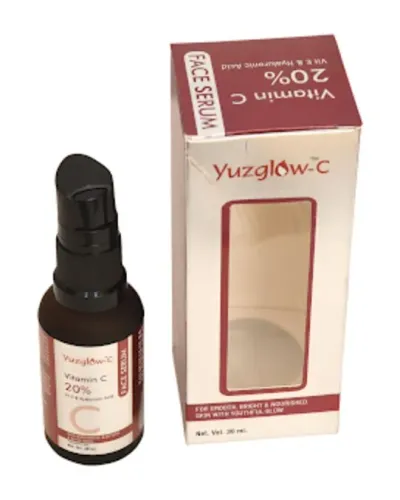
If you are comparing Yuzderm Pharmaceuticals Pvt. Ltd.’s vitamin C serum with another product, check these same details rather than choosing by percentage alone. Reject a serum with no batch or expiry information, a leaking pump, or unexplained colour change.
For kojic acid or arbutin, compare the named concentration and vehicle because laboratory enzyme results do not prove equal improvement in human pigmentation.
Related products
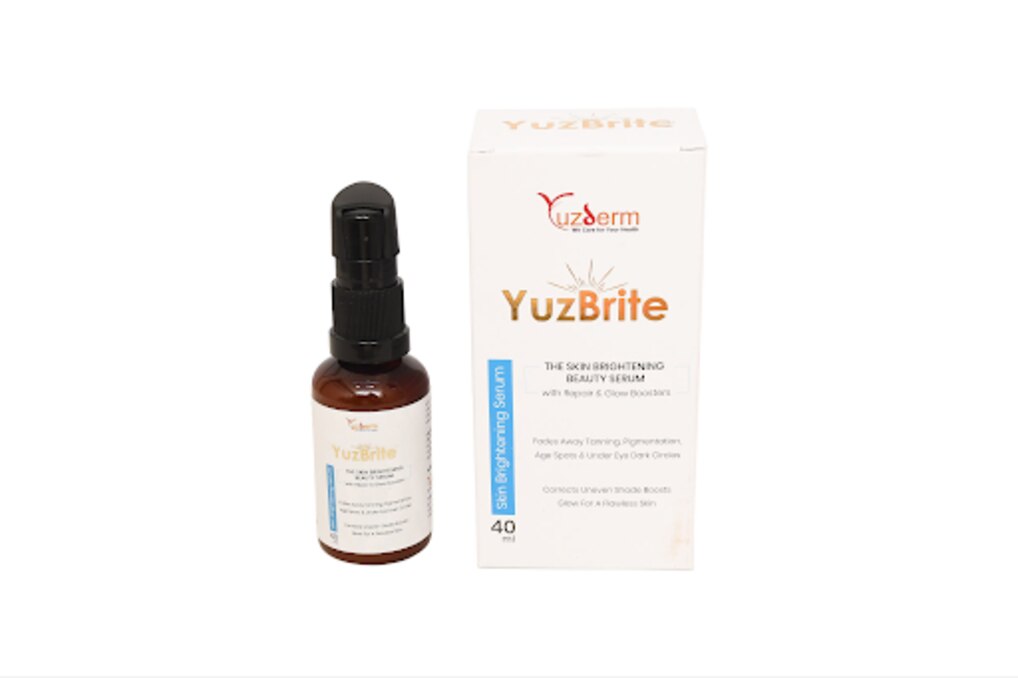
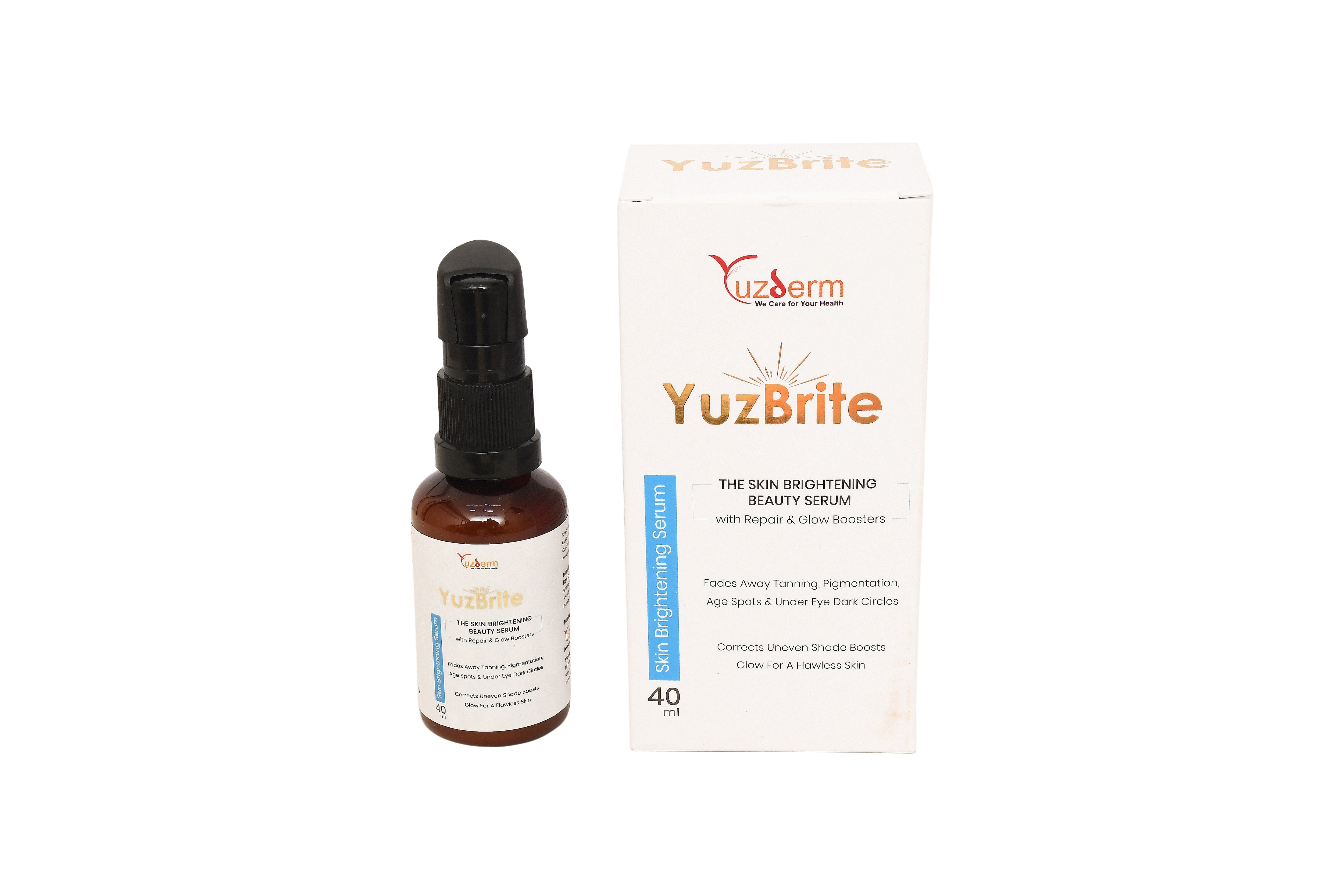 | Skin Care Yuzbrite ₹550 Pigmentation Control: Formulated to fade away tanning, dark spots, and age spots. |
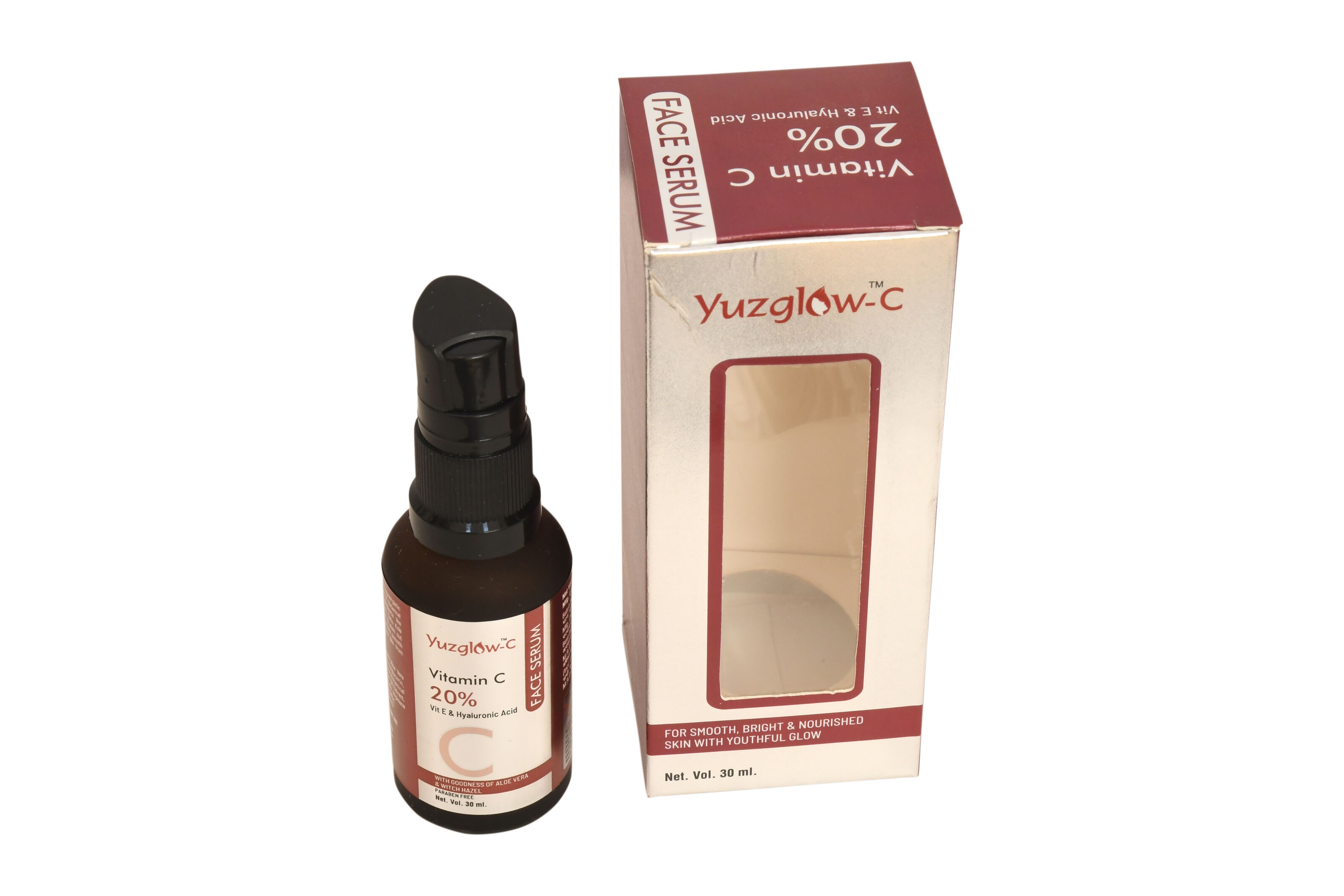 | Skin Care ₹1330 Vitamin C (20%): A high concentration used for brightening the complexion, reducing hyperpigmentation, and stimulating collagen production. View product → |
Why sunscreen and diagnosis determine the result
Sunscreen prevents pigmentation from returning. Apply a broad-spectrum sunscreen with SPF 30 or higher every morning to exposed skin, then reapply every two hours outdoors and after sweating or swimming. Broad-spectrum coverage blocks UVA and UVB; a tinted formula containing iron oxides adds visible light protection, which matters particularly for melasma and deeper skin phototypes.
Judge progress with photographs taken once a month in the same place, lighting, camera distance, and clean skin. Daily mirror checks exaggerate small changes. Fading usually appears first in epidermal pigment; dermal melanin responds more slowly and less completely.
If a serum causes stinging, scaling, or persistent redness, reduce or stop it because irritation can create new post-inflammatory hyperpigmentation.
Do not treat every dark mark as a cosmetic problem. Ask a dermatologist to examine pigmentation that is unexplained or shows any of these warning signs:
- It changes in size, shape, colour, or elevation.
- It is asymmetric or has an irregular border.
- It bleeds, crusts, itches, hurts, or does not heal.
- It differs sharply from your other spots.
- It returns quickly despite sun protection.
Lentigo maligna, melanoma, and other pigmented lesions can resemble harmless marks. A brightening serum cannot diagnose them, and using one first can delay examination or biopsy.
Frequently asked questions
How can you tell what is causing uneven skin tone?
Look at the colour and pattern. Brown or grey-brown patches usually indicate excess melanin; red or purple areas point to blood vessels or inflammation; hollows, facial hair, and lighting can create shadows without changing pigment.
Which brightening ingredients help manage dark spots?
Ingredients such as vitamin C, niacinamide, azelaic acid, kojic acid, alpha-arbutin, and retinoids target pigment through different pathways. Choose one active first and follow its labelled concentration and directions.
How should you use a brightening serum safely?
Patch test first, apply a small amount to clean dry skin, and introduce one active at a time. Stop if you develop persistent burning, swelling, blistering, or a spreading rash.
Why is sunscreen essential when treating dark spots?
Ultraviolet and visible light can stimulate pigment and reverse progress. Use broad-spectrum SPF 30 or higher every morning, reapply during prolonged outdoor exposure, and wear a hat when practical.
Related products
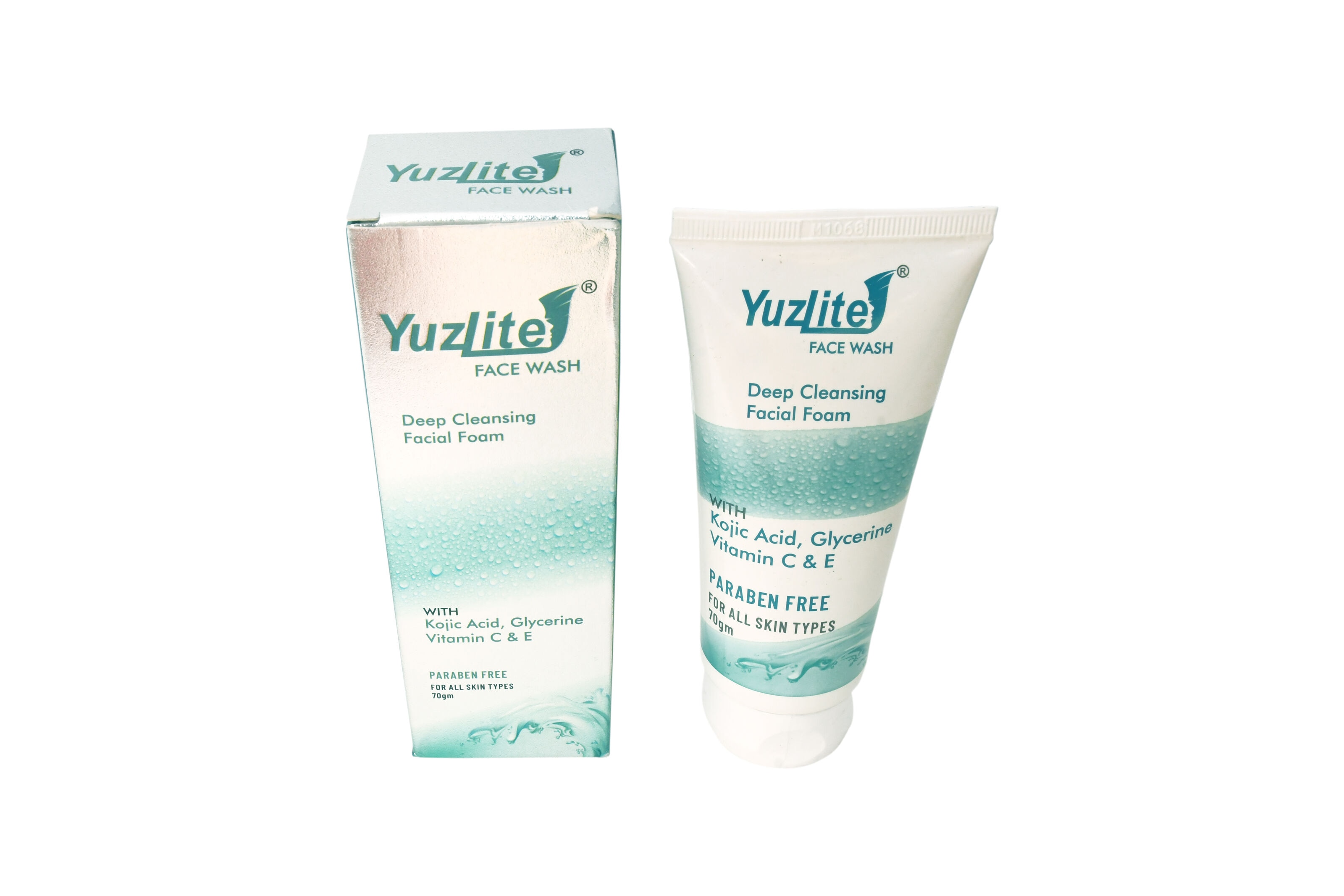 | Skin Care ₹285 Kojic Acid- Improves skin tone Vitamin C - Skin Rejuvenating ,Powerful Antioxidant Vitamin E- Powerful Antioxidant Glycerin-Soothing Effects {Reduces... View product → |
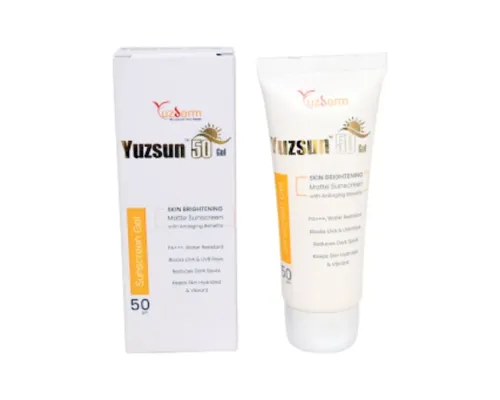
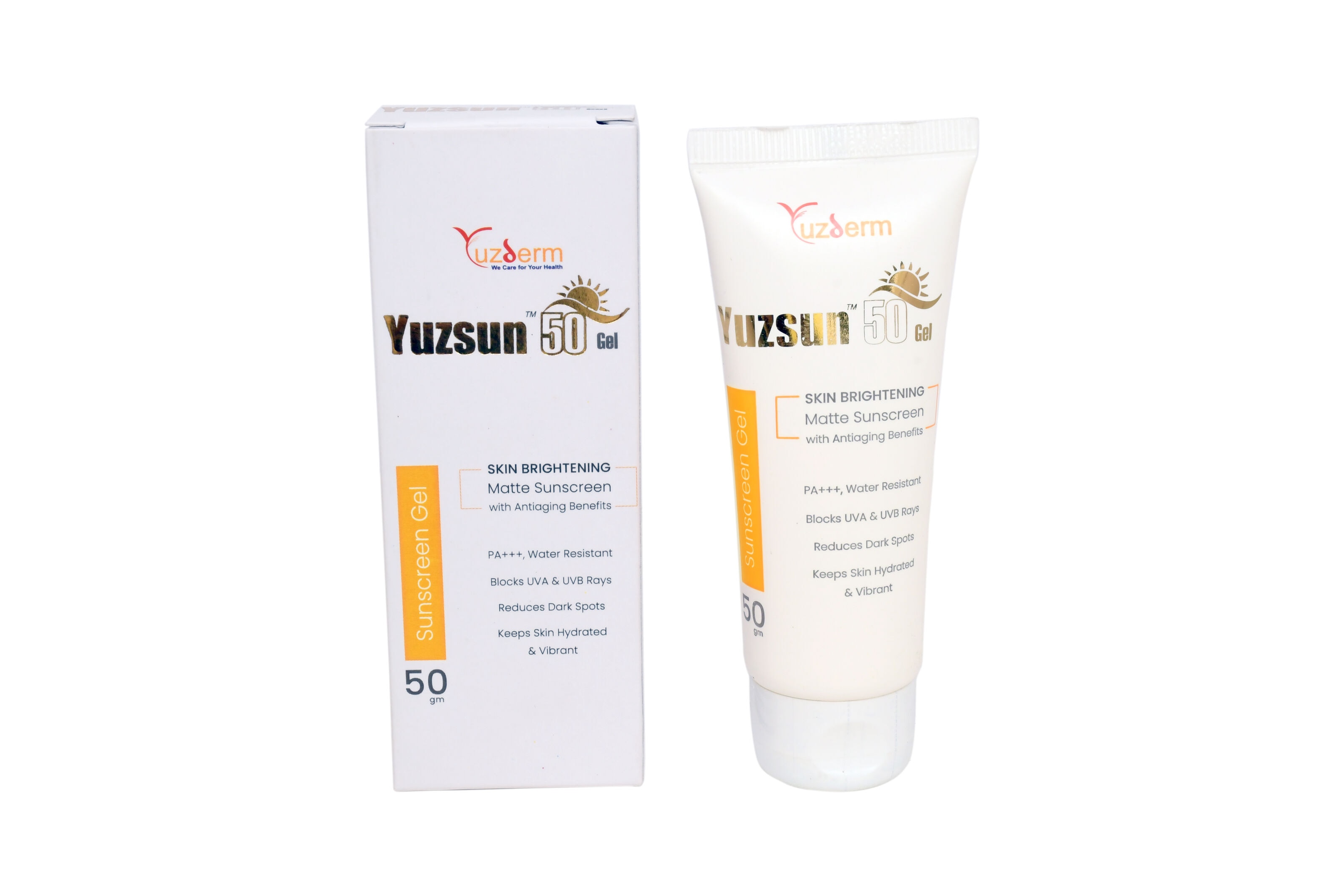 | Skin Care ₹749 Yuzsun 50 Gel is marketed as a Skin Brightening Matte Sunscreen that combines high-level UV protection with cosmetic benefits like anti-aging and... View product → |
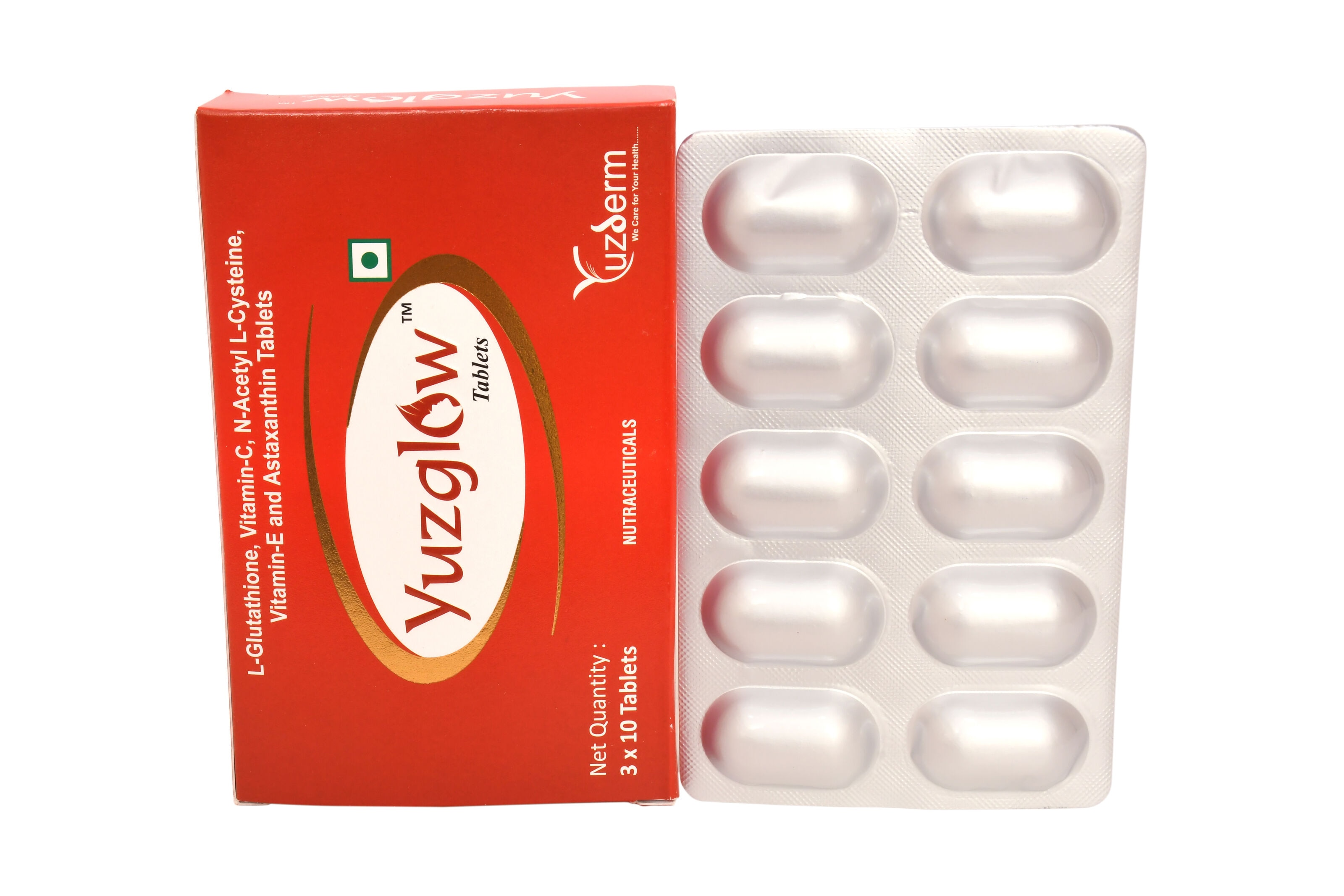 | Tablet ₹823 The box lists five primary active ingredients. These are often used together to boost the body's natural antioxidant levels: L-Glutathione: Often... View product → |