A sunscreen can offer strong labelled protection yet remain a poor daily choice if it feels greasy, pills under makeup, leaves an obvious cast, or encourages you to apply too little. By the end, you will know how to judge a matte finish, apply the correct amount, interpret SPF and UVA claims, and understand what “brightening” can realistically do for tanning and uneven tone.
Key takeaways
- Apply two finger lengths of sunscreen to your face and neck.
- Use broad-spectrum SPF 30 or higher with UVA protection every morning.
- Reapply after sweating, swimming, or prolonged outdoor exposure.
- Choose a matte formula that suits your skin type and does not pill.
What a Matte Finish Changes in Daily Sunscreen Use
Matte sunscreen leaves less surface reflection, so your face looks less shiny and feels less oily after application. It is not necessarily powder-dry: the finish can range from soft and natural to distinctly dry-touch. Absorbent powders or particles reduce the slick film that makes some sunscreens uncomfortable.
That change matters because comfort affects whether you apply sunscreen every morning and use enough of it. Oily skin sunscreen formulae can control the greasy feel that prompts users to wipe product away, while a combination skin sunscreen can reduce shine across the forehead, nose, and chin without making drier cheeks feel tight.
Look for reduced shine without obvious white cast, drag, flaking, or pilling under makeup.
More oil control is not automatically better. A heavy powder load can make a formula rough, emphasize dry patches, or aggravate a damaged skin barrier. Choose a non-greasy sunscreen that still spreads evenly and leaves a continuous film; an uncomfortable finish can lead to applying too little, reducing real-world protection.
Matte describes appearance and touch, not UV performance. Check the product’s SPF and separate UVA protection claim rather than assuming a dry finish protects better. Oil control and high SPF do not remove reapplication: restore the film after sweating, swimming, or towel drying, and follow the label’s routine guidance.
How Much to Apply and Where It Belongs in Your Morning Routine
Use the full face and neck sunscreen amount: two finger-length strips of product, measured along the index and middle fingers. This two-finger sunscreen method gives you a practical starting point for the standard application target of 2 mg/cm². Add more for a large face, long neck, or any area that still looks thin.
1. Apply sunscreen to clean, dry skin after moisturiser. Divide the product between your forehead, cheeks, nose, chin, neck, and ears rather than placing one thick blob in the centre.
2. Spread it evenly to the hairline, jawline, and exposed neck. Include sunscreen on the hairline, ears, and eyelids when the formula is labelled for that area and does not sting; keep it out of the eyes.
3. Smooth the product into a continuous film without rubbing until most of it disappears. Missed edges create unprotected strips even when the centre of your face has enough product.
4. Wait for the film to settle before applying foundation or powder. Sunscreen before makeup prevents makeup from becoming the first layer over bare skin, while adequate settling reduces pilling and patchy coverage.
Reapply at least every two hours during outdoor exposure, and immediately after swimming, sweating, or towel drying. A matte finish does not replace reapplication or prove that the product is water-resistant.
How to Read SPF, PA, UVA, and Reapplication Guidance
SPF 50 provides more UVB protection than SPF 40, but neither number tells you how long the sunscreen lasts. SPF is based mainly on redness from UVB and is determined using the ISO 24444 SPF test method# at a controlled application amount. Applying too little reduces real-world protection sharply.
- Compare SPF 40 versus SPF 50 as a UVB margin, not as permission to stay outside longer. Choose the higher rating for prolonged outdoor work, but check UVA protection separately.
- Read PA+++ as a UVA claim within the PA rating system. UVA contributes to tanning, uneven tone, and photoaging, so PA+++ adds information that the SPF number cannot provide.
- Reapply at least every two hours during continued sun exposure. A short commute followed by indoor time does not create the same exposure as outdoor work, but reapply before extended midday exposure.
- After heavy sweating, swimming, or towel drying, reapply immediately. A matte finish does not prove water resistance, and rubbing with a towel can remove the sunscreen film.
- Treat “water resistant” as a separately tested finished-product claim. If the label makes no such claim, do not assume the formula will maintain its stated protection in water.
For outdoor work, swimming, or repeated sweating, carry the product and renew the film rather than relying on its original application. That matters even more when you use makeup or powder, because touch-ups can disturb coverage instead of replacing it evenly.
What Brightening Sunscreen Can Do for Tanning and Uneven Tone
Existing melanin does not disappear because a sunscreen contains a tint. A brightening sunscreen can make dark spots look less noticeable immediately, while its iron oxide pigments reduce exposure to portions of visible light that can deepen pigmentation. That is camouflage and tanning prevention, not removal of established pigment.
This distinction matters most with melasma and darker phototypes, where visible light can contribute to persistent uneven tone. Choose a melasma sunscreen shade that blends with your skin rather than leaving a pale, orange, or ashy cast; a shade you dislike often leads to applying too little or skipping it.
The tint supports visible light protection, but it does not replace a separate UVA result or an adequate SPF claim.
Coverage also depends on the finished film, not the ingredient list alone. Poor iron oxide dispersion, pigment settling, or rub off can leave some areas with weaker visible light coverage even when the labelled SPF remains unchanged. Check whether the product stays uniform during application and wear.
Use sunscreen to prevent new darkening and protect progress made with a clinician recommended pigment treatment. Expect correction from the treatment active and consistent use, not from tint alone. If pigmentation persists, spreads, or returns quickly, seek assessment rather than layering more brightening products.
How to Judge the Formula Before You Choose It
Choose the finished formula, not the word “matte.” A suitable product spreads without dragging, sets evenly, and does not leave a white cast sunscreen effect or trigger sunscreen pilling under moisturiser and makeup. Test it along the jawline for 20 minutes before committing.
| Feature | What to inspect | Why it matters |
|---|---|---|
| UVA and visible-light coverage | Separate UVA result, plus iron oxides tinted sunscreen if pigmentation is persistent | SPF measures mainly UVB; iron oxides can reduce visible-light exposure but do not erase established melanin |
| Wet-use performance | A specific water resistance claim supported by the finished-product test | Matte texture alone does not prove the film survives sweat, rain, swimming, or towel drying |
| Finish and skin feel | Powder level, slip, settling time, and residue after drying | Heavy oil absorption can crack on dry or barrier-impaired skin, while too little oil control can feel greasy in humid weather |
Check the ingredient system behind “brightening.” Niacinamide, azelaic acid, tranexamic acid, licorice-derived ingredients, and antioxidants need finished-formula testing for pH, solubility, oxidation, preservation, and irritation; a strong SPF result does not validate those claims. Yuzderm Pharmaceuticals Pvt.
Ltd. should be able to identify the product’s UVA evidence, stability period, and water-resistance test rather than relying on texture or ingredient names.
For hot, humid conditions, choose a film that dries without becoming tacky. For dry or sensitive skin, avoid a powder-heavy formula that tightens, flakes, or exposes gaps after facial movement.
Related products
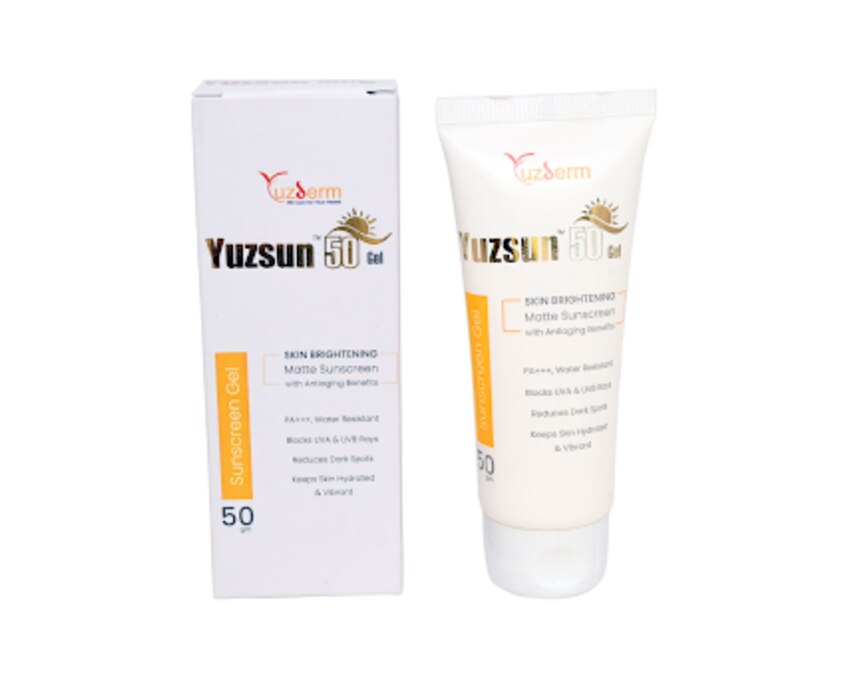
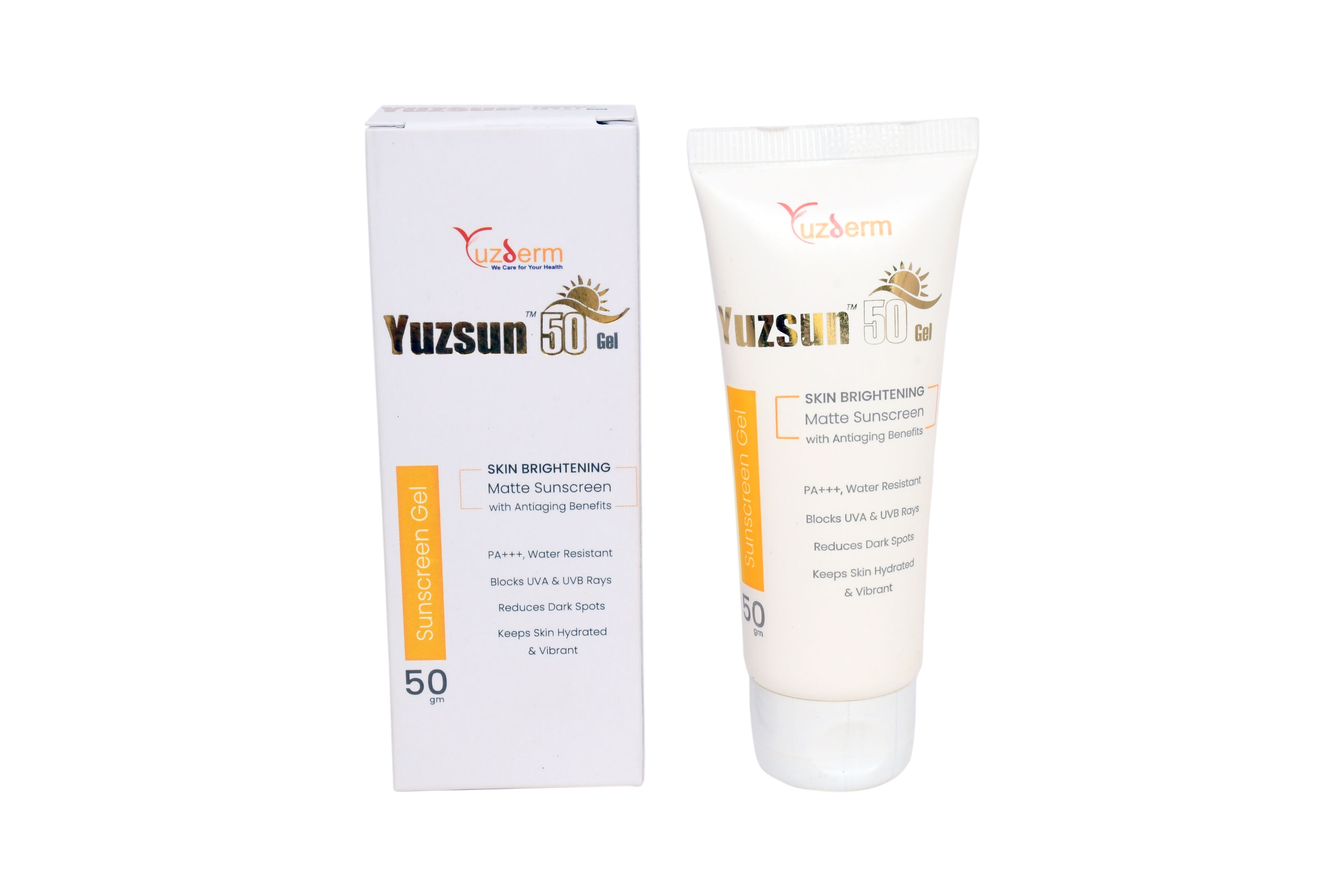 | Skin Care ₹749 Yuzsun 50 Gel is marketed as a Skin Brightening Matte Sunscreen that combines high-level UV protection with cosmetic benefits like anti-aging and... View product → |
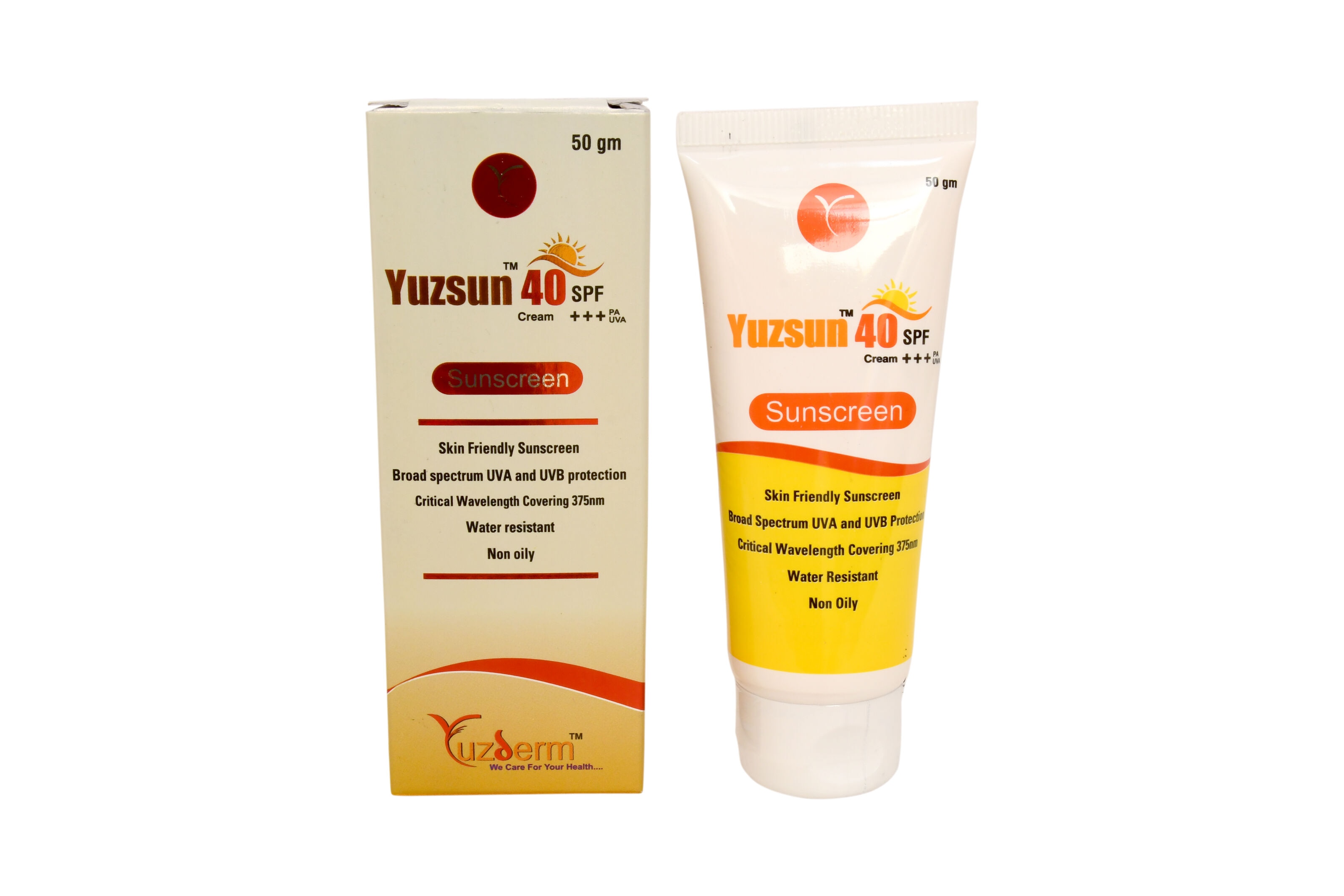 | Skin Care ₹495 SPF Rating: 40 (Sun Protection Factor), which blocks approximately 97.5% of UVB rays—the primary cause of sunburn. PA Rating: PA+++. View product → |
Frequently asked questions
What does a matte finish change in daily sunscreen use?
A matte finish reduces surface shine and the slick feel some sunscreens leave behind. The result can range from soft and natural to distinctly dry-touch, depending on the formula.
How much matte sunscreen should you apply?
Use two finger lengths for the face and neck, then apply sunscreen after moisturiser and before makeup. Cover the ears and other exposed areas instead of stopping at the jawline.
What do SPF, PA, and UVA on sunscreen labels mean?
SPF indicates protection against UVB, while UVA protection is shown through labels such as PA ratings or broad-spectrum claims. Check the exact label and follow its reapplication instructions.
Can brightening sunscreen reduce tanning and uneven skin tone?
Consistent sunscreen use helps limit the UV exposure that drives tanning and can help prevent uneven tone from becoming more pronounced. It does not erase existing pigmentation immediately.