Dullness can come from dehydration, rough surface cells, irritation, tanning, post-acne marks, or an underlying skin condition, and each cause changes what your cleanser should do. By the end, you will be able to assess the likely cause, compare cleanser formulas, test a brightening wash safely, and recognise when a leave-on product or dermatologist is the better choice.
Key takeaways
- Separate dehydration, buildup, pigment, irritation, and skin conditions first.
- Choose a low-irritation cleanser that supports the skin barrier.
- Judge brightening ingredients by formula, concentration, and contact time.
- Patch-test new products and reduce use if treated skin becomes irritated.
Identify what is making your skin look dull
Start by identifying the cause; use the clues below to separate dehydration, surface buildup, pigment, irritation, and a skin condition. Dull skin causes and uneven skin tone causes overlap, but each points to a different response.
- Dehydrated skin looks tight, flaky, or creased, with temporary improvement after moisturizer.
- Dead skin cells on face create rough texture and a gray or uneven reflection; clogged pores may accompany retained scale.
- Brown marks after acne, bites, burns, dermatitis, or procedures suggest post-inflammatory hyperpigmentation. Freckling, tanning, or patches on sun-exposed skin point to pigment and require daily broad-spectrum UV protection; tinted sunscreen with iron oxides adds visible-light protection.
- Stinging, redness, peeling, or worsening tone after a product indicates irritation. A harsh cleanser can create inflammation and new pigment, especially in darker phototypes.
- Symmetrical cheek or forehead patches, persistent itch, swelling, thick scale, or rapid change deserves dermatology advice rather than stronger washing.
If skin feels comfortable but looks rough, limited exfoliation may address buildup. If it feels tight or burns, choose a gentle cleanser first and avoid assuming pigment is the problem. A face wash cannot treat melasma or replace leave-on sunscreen, and persistent discoloration needs diagnosis.
Choose a cleanser that protects the skin barrier
Choose a mildly acidic syndet cleanser to preserve the skin barrier. Check the finished formula’s syndet cleanser pH, not just “soap-free” or “natural” claims; conventional alkaline soap can raise skin-surface pH and worsen tightness, peeling, and irritation.
| Skin state | Look for | Avoid or verify |
|---|---|---|
| Dry, tight, or peeling | Creamy or low-foam texture, easy rinsing, and little post-wash tightness | Strong fragrance, essential oils, scrubbing particles, and high-residue formulas |
| Sensitive or easily irritated | A short ingredient list, fragrance-free formula, and repeat-use evidence for low stinging | “Botanical” claims treated as proof of gentleness; irritation can trigger post-inflammatory pigmentation |
| Acne-prone | A gentle face wash with non-comedogenic cleansing agents; salicylic acid at 0.5–2% fits the U.S. over-the-counter acne framework | Frequent use that causes dryness; that concentration does not prove treatment for melasma or dark marks |
A face wash for sensitive skin should leave no burning, redness, or tight film after rinsing. If a brightening cleanser stings, switch to a non-active gentle face wash until the skin feels comfortable; new irritation can deepen uneven tone, especially after acne or dermatitis.
Ask for testing on the finished product: pH, wash-off behavior, preservative robustness, repeat-insult irritation, and consumer reports of tightness or stinging.
Judge brightening ingredients by formula and contact time
A brightening ingredient on the label does not guarantee a brightening result. Rinsing removes most of the formula within minutes, so judge the finished cleanser by delivered dose, contact time, pH, stability, and product-specific testing—not by the ingredient name alone.
- Kojic acid face wash: Check the concentration, kojic acid form, pH, and stability data. Without controlled testing on the finished cleanser, treat its role as supportive rather than equivalent to a leave-on pigment treatment.
- Vitamin C cleanser: Identify whether it uses L-ascorbic acid or a vitamin C derivative, then check concentration, pH, packaging, and stability. A claimed antioxidant benefit does not prove meaningful tone correction after rinsing.
- Vitamin E skincare: Vitamin E can support antioxidant and barrier-focused care, but it is not a strong standalone treatment for established dark marks in a wash-off product. Check whether the formula leaves skin comfortable instead of coated or tight.
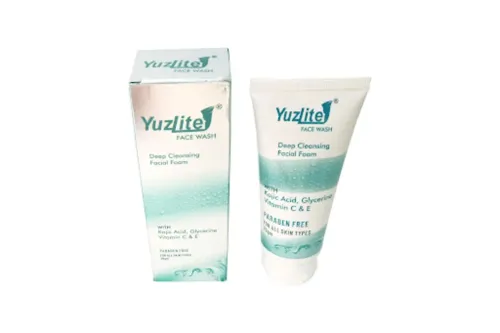
For Yuzderm Pharmaceuticals Pvt. Ltd., the practical information to request for Yuzlite Facewash is the concentration and form of each active, finished-product pH, rinse-off testing, and repeat-use irritation results.
Choose a leave-on serum or cream when you need sustained contact for post-inflammatory marks, tanning, or melasma; select a cleanser for gentle daily support unless the actual formula has clinical evidence.
Related product
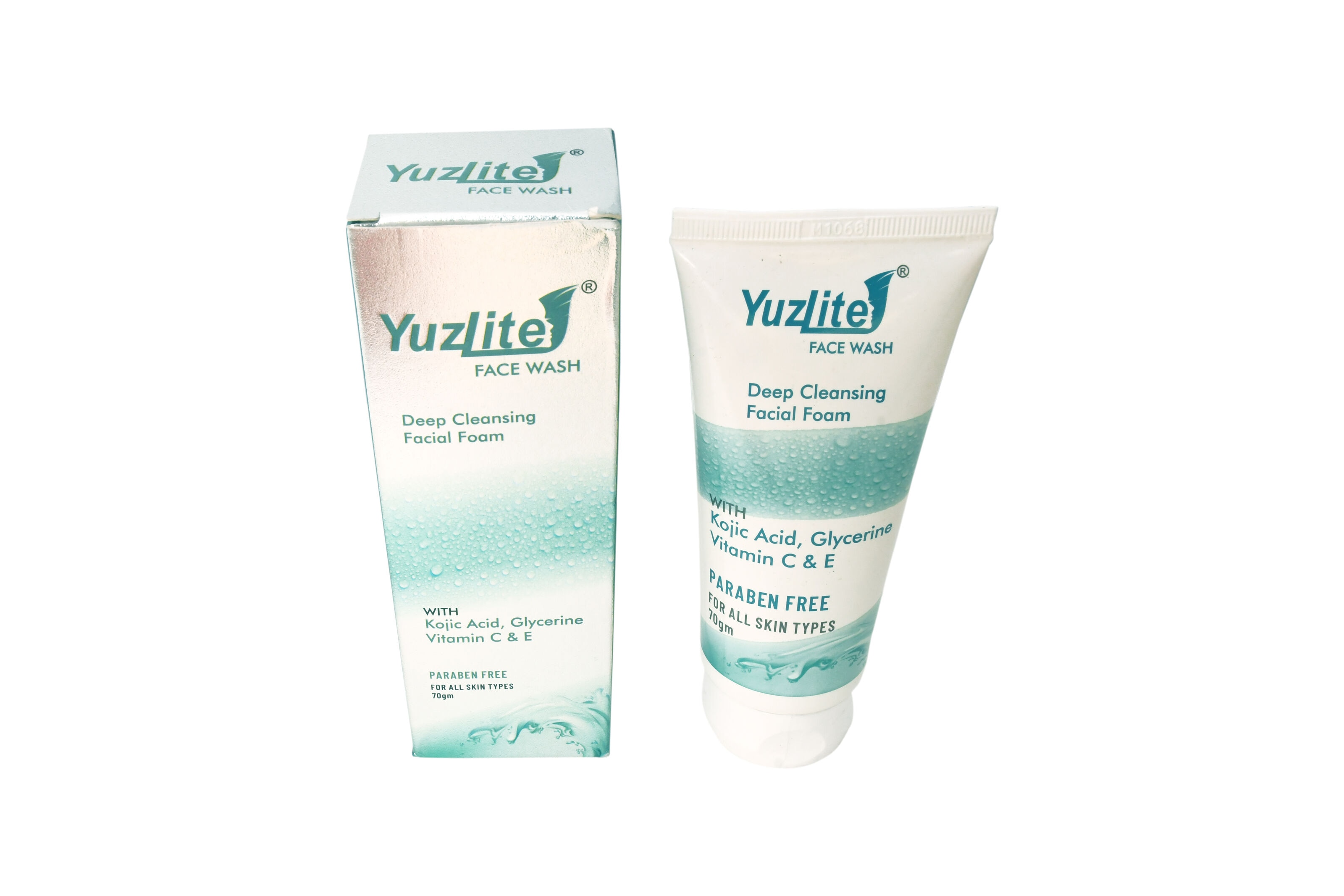 | Skin Care ₹285 Kojic Acid- Improves skin tone Vitamin C - Skin Rejuvenating ,Powerful Antioxidant Vitamin E- Powerful Antioxidant Glycerin-Soothing Effects {Reduces... View product → |
Use the face wash without creating more irritation
Use one to two pumps, or a dime-sized amount, for each wash. That is enough to cover your face in a thin film; extra cleanser does not remove more dullness and can increase cleanser irritation. Wet your skin with lukewarm water before applying it with clean fingertips.
- Massage lightly for 20 to 30 seconds, using small circles over the forehead, cheeks, nose, and chin. Do not scrub peeling areas or rub the skin around your eyes.
- Rinse completely with lukewarm water. A lukewarm water face wash is less drying than hot water, while cold water does not remove cleanser or residue as effectively.
- Pat dry, then apply moisturiser while the skin still feels slightly damp.
Face wash twice a day is suitable only when your skin remains comfortable. Introduce a new cleanser once each evening for three or four days; add a morning wash after that if you notice no tightness, stinging, or increased redness.
If your skin is dry or reactive, keep the cleanser to evening use and rinse with water in the morning. Do not introduce it alongside a new exfoliating acid or retinoid, because irritation becomes harder to identify.
Patch-test and adjust for sensitive or treated skin
Test a brightening cleanser on a small area before washing your whole face. Apply the normal amount to skin beside the jaw or behind the ear, leave it on for the same time you plan to cleanse, rinse, and repeat once daily for two days.
Do not test over eczema, rosacea, cuts, or recently treated skin.
- If there is no reaction after 24 hours, use it on one side of the face for three nights while keeping the other side on a bland cleanser.
- Stop immediately if you feel burning, itching, visible redness, swelling, flaking, or unusual tightness. Rinse with lukewarm water and use a fragrance-free moisturiser; do not add acids, retinoids, scrubs, or bleaching products until the skin settles.
- Choose a face wash for eczema-prone skin or a face wash for rosacea-prone skin when your barrier is compromised. Avoid fragrance and essential oils: “botanical” does not mean safer, and irritation can deepen post-inflammatory pigmentation.
- Treat kojic acid sensitive skin cautiously. A patch test face wash is especially important if you use kojic acid, prescription retinoids, benzoyl peroxide, or have recently undergone peeling or laser treatment.
Seek medical advice for blistering, marked swelling, pain, or a reaction that persists after stopping.
Use performance evidence to compare products
Ask for evidence on the finished cleanser, not just a list of brightening ingredients. A rinse-off product has limited contact time, so claims about niacinamide, azelaic acid, retinoids, tranexamic acid, or alpha-hydroxy acids need product-specific support rather than ingredient reputation alone.
| Product detail | Evidence worth choosing | Warning sign |
|---|---|---|
| Face wash ingredient list | Full INCI list, active forms, fragrance, and potential irritants are disclosed | “Brightening complex” appears without amounts or named ingredients |
| Cleanser pH | A measured pH suited to regular facial use, with a test method or specification | No pH information, or stinging and tightness after washing |
| Brightening cleanser clinical testing | A controlled study on the actual rinse-off formula, with treatment duration, participant numbers, and measurable tone or pigment endpoints | Only ingredient studies, before-and-after photographs, or “removes dullness” claims |
| Formula performance | Data on repeat-insult irritation, residue, wash-off, stinging, and consumer tightness | The cleanser leaves film, causes redness, or makes you cleanse less often |
Treat a cleanser’s brightening effect as supportive unless this evidence is available. Use sunscreen for uneven skin tone every morning; broad-spectrum protection is essential, and a tinted formula with iron oxides can add visible-light protection.
See a dermatologist for rapidly changing or sharply defined dark patches, persistent itching or scaling, pain, bleeding, widespread rash, or pigmentation that follows a procedure. Seek advice when uneven tone persists despite gentle care and sunscreen, because melasma, dermatitis, acne-related inflammation, and other conditions need different treatment.
Frequently asked questions
What causes dull skin and uneven skin tone?
Dehydration, surface buildup, excess pigment, irritation, and skin conditions can all contribute. Check for tightness, flaking, rough texture, redness, dark patches, or persistent changes before choosing a cleanser.
How do you choose a face wash that protects the skin barrier?
Choose a cleanser that leaves no tight, squeaky feeling after rinsing. Avoid combining strong exfoliating acids, scrubs, and high-fragrance formulas when your skin is dry, reactive, or already using treatment products.
Do brightening ingredients in face wash work?
Their effect depends on the ingredient, formula, concentration, and time the product remains on your skin. A rinse-off cleanser has less contact time than a leave-on product, so judge claims against testing evidence rather than the ingredient name alone.
How should you use face wash without causing irritation?
Use lukewarm water, clean your face with your fingertips, rinse thoroughly, and pat dry. Start once daily if your skin is sensitive, then adjust based on tightness, burning, redness, or peeling.
How do you patch-test a face wash for sensitive or treated skin?
Apply a small amount to a limited area for several days before using it across your face. Stop if you develop persistent burning, swelling, rash, or worsening redness, and ask a clinician before changing treatment-related skincare.