A sunscreen gel can make daily protection easier for oily or acne-prone skin, but its lightweight feel does not reveal how well it protects or whether it will tolerate your skin. By the end, you will know how to compare gel with other vehicles, read SPF and UVA claims, apply the right amount, reapply it, and fit it into a practical morning routine.
Key takeaways
- Choose a lightweight, non-comedogenic gel if oiliness affects consistent sunscreen use.
- Use broad-spectrum SPF 30 or higher and check the UVA protection rating.
- Apply enough sunscreen 15 minutes before sun exposure and reapply every two hours outdoors.
- Judge a gel by protection, comfort, reapplication ease, and formula claims—not dry finish alone.
Why a sunscreen gel often suits oily and acne-prone skin
A sunscreen gel for oily skin often wins on adherence: a low-oil, quick-drying vehicle feels lighter and less sticky, so you are more likely to apply enough and reapply. That is a formulation and behavior advantage, not proof that gel protects better.
Gel versus cream sunscreen is mainly a texture and tolerance decision. Compare the options this way:
| Option | Typical feel | Best fit and limitation |
|---|---|---|
| Gel | Fast-drying, low-residue finish | Oily, combination, or acne-prone skin; hydroalcoholic gels can sting dry or irritated skin |
| Cream | Richer, more cushioning film | Dry, sensitive, or eczema-prone skin; may feel heavy on oily skin |
| Lotion | Fluid emulsion with moderate comfort | Normal or combination skin; can leave more residue than a gel |
| Fluid | Thin, spreadable layer | Oily skin that dislikes cream; some fluid formulas run or contain drying alcohol |
| Spray | Quick body application | Large areas; facial coverage can be uneven unless sprayed into your hands and spread thoroughly |
A gel sunscreen for acne-prone skin does not treat acne, but reducing UV exposure can limit darkening of post-acne marks. Choose an oil-free sunscreen when you want to reduce a greasy feel, but do not treat “oil-free,” “non-greasy,” and “non-comedogenic” as identical claims.
Check tolerance before committing. Ethanol, volatile solvents, film-forming polymers, or silicones can cause stinging, dryness, or an occlusive feel; choose a cream or gentle lotion when your barrier is cracked, peeling, or irritated.
How to read SPF, PA, UVA, and formula claims
SPF measures protection against erythema-producing UVB, not complete protection from UVA. Under standard test conditions, SPF 30 transmits about 1/30 of erythemally effective radiation, while SPF 50 transmits about 1/50; SPF 50 is not twice as protective as SPF 25. The key distinction is SPF versus UVA protection.
| Label detail | What it measures or indicates | What to check |
|---|---|---|
| SPF 30 or higher | UVB protection linked to sunburn | Do not treat it as a UVA rating |
| PA rating | UVA protection, with more plus signs indicating a higher tested grade | Compare PA ratings within the same testing system |
| Broad-spectrum sunscreen | Coverage across both UVB and UVA ranges | Prefer this for daily facial use |
| Water-resistant sunscreen | Retention after a stated water-exposure test | Look for 40- or 80-minute wording; it is not all-day protection |
A gel vehicle does not guarantee stronger protection. Choose a broad-spectrum sunscreen with a PA rating and a photostable formula; SPF testing uses ISO 24444, while ISO 24443 characterizes in-vitro UVA protection. A high SPF without meaningful UVA performance leaves part of daily exposure unaddressed.
Check the full claim panel for water resistance, but reapply after sweating, swimming, towel drying, or rubbing. Sebum can also break the film on oily facial skin. “Non-comedogenic” and “oil-free” describe tolerability or texture, not UV performance, so they cannot replace SPF and UVA evidence.
The correct amount, timing, and reapplication schedule
Use the two-finger measure for your face and neck: squeeze sunscreen gel in two lines along the index and middle fingers, then spread it evenly over the face, ears, and neck. This is a practical way to approach the 2 mg/cm2 sunscreen application target used in SPF testing.
A thin layer that disappears instantly may feel comfortable but deliver less protection than the label result suggests.
Apply sunscreen before going outside, ideally 15 minutes before exposure. Use it as the last skincare step, and do not wait until you reach the beach, car, or workplace. Give the gel time to form a continuous film; rubbing it in repeatedly or applying makeup immediately can create gaps.
Follow this sunscreen reapplication schedule:
- Reapply at least every two hours during outdoor exposure, even when the product has a high SPF.
- Reapply immediately after swimming or heavy sweating. Pat the skin dry first, then apply a full amount rather than adding a token layer.
- Reapply after towel drying because the towel removes sunscreen along with moisture.
- Reapply during prolonged outdoor activity, including commuting, sports, and outdoor work.
- Reapply after washing your face or wiping it repeatedly.
If you spend the day indoors, reapplication depends on exposure: reapply before extended time outdoors, strong sun near windows, or activities that remove the film. A quick-drying gel is not a once-daily product.
How sunscreen gel fits into your morning skincare routine
Cleanse first, then apply any morning treatment, moisturiser, sunscreen, and makeup. That sunscreen skincare order keeps sunscreen as the final skincare layer, where it can form an even protective film. Use sunscreen with acne medication only after confirming the medication is intended for morning use; many retinoids belong at night.
- Cleanse and pat your skin dry.
- Apply vitamin C serum, if you use it, and let it settle.
- Apply prescribed morning acne medication as directed. If it stings, ask your dermatologist whether moisturiser should go underneath.
- Apply moisturiser when your skin feels tight or flaky; skip it only if your sunscreen already provides enough comfort.
- Apply sunscreen gel generously to the face, ears, and neck.
- Apply makeup after the sunscreen has set. This is sunscreen under makeup, not sunscreen mixed into foundation.
Prevent pilling by using thin layers, allowing each one to dry, and avoiding excess serum or moisturiser beneath the gel. Press products into the skin rather than repeatedly rubbing across it. Give sunscreen several minutes to set before foundation, then use a damp sponge or light pressing motion instead of dragging a brush.
Sweat, glasses, masks, and towel drying can remove the film, so reapply rather than smoothing the remaining layer back into place.
How to choose a gel that performs beyond a dry finish
A dry finish is not enough: reject a daily gel that stings, pills, migrates into your eyes, or loses an even film after sebum exposure.
| Check | What to look for | Why it matters |
|---|---|---|
| Tolerance | A fragrance-free sunscreen with barrier-tolerance and eye-area sting testing | Ethanol and volatile solvents can worsen stinging after shaving, acne treatment, or barrier damage |
| UV performance | SPF, UVA protection, photostability, and water-resistance results when claimed | “Gel” describes the vehicle, not the protection level |
| Acne suitability | A non-comedogenic sunscreen supported by a human comedogenicity or acne-cosmetic study | Oil-free does not prove that pores will remain clear |
| Formula durability | Sunscreen formulation testing after heat, light, sebum exposure, and application over moisturiser | A formula can pass SPF testing yet pill or lose uniform coverage |
| Pack performance | Compatibility with the container, stable dispensing, and protection from air or light where required | Filters can adsorb to packaging, leak, separate, or deliver inconsistent doses |
Ask for the test basis rather than accepting “non-greasy” or “oil-free” as evidence. Also check whether the directions address generous application and reapplication after sweating, swimming, or towel drying; a lightweight gel invites under-dosing.
A formulation manufacturer adds value by screening the complete formula and pack together, then adjusting solvent levels, film-formers, filters, humectants, and preservatives without sacrificing protection. Yuzderm Pharmaceuticals Pvt. Ltd. can apply that development discipline when converting a matte sensory target into a gel tested for real morning routines, not just a smooth first application.
Related products
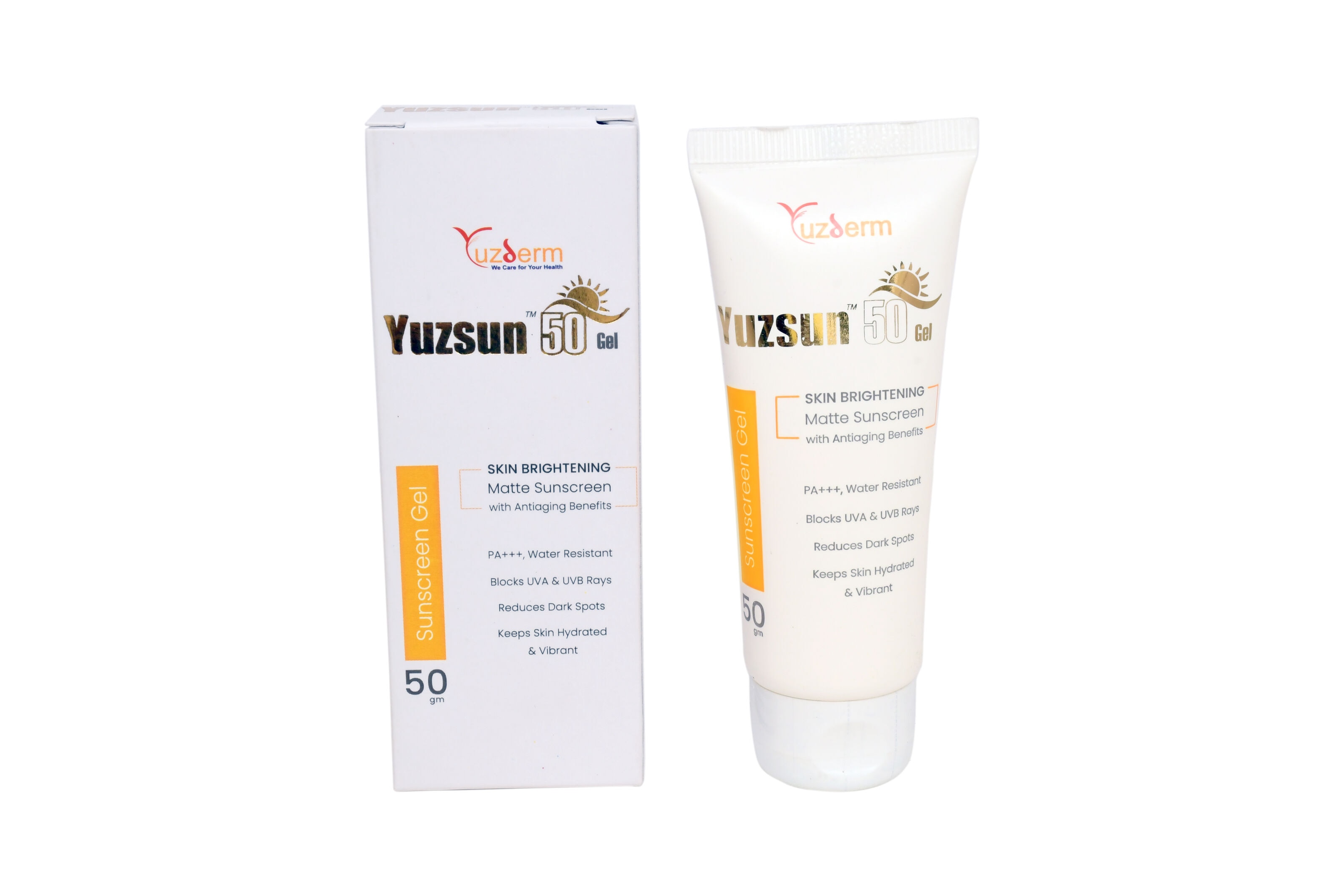 | Skin Care ₹749 Yuzsun 50 Gel is marketed as a Skin Brightening Matte Sunscreen that combines high-level UV protection with cosmetic benefits like anti-aging and... View product → |
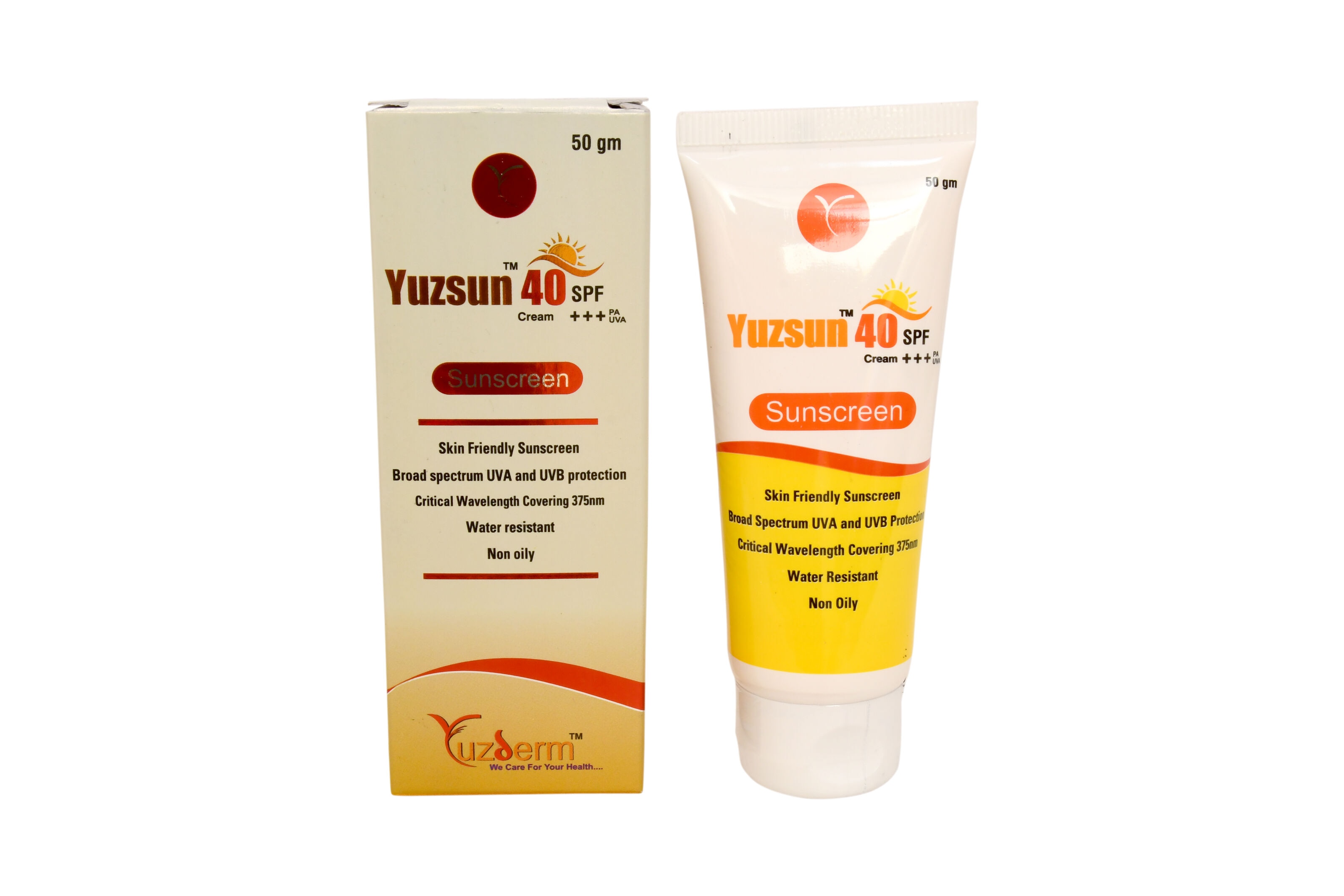 | Skin Care ₹495 SPF Rating: 40 (Sun Protection Factor), which blocks approximately 97.5% of UVB rays—the primary cause of sunburn. PA Rating: PA+++. View product → |
Frequently asked questions
Why does sunscreen gel often suit oily and acne-prone skin?
Gel formulas usually feel lighter and less greasy, which can make daily application and reapplication easier for oily skin. Check the full ingredient list and choose a non-comedogenic formula if breakouts are a concern.
What do SPF, PA, and UVA mean on sunscreen packaging?
SPF indicates protection against UVB, while UVA protection is shown through claims such as PA ratings or broad-spectrum labelling. Compare both rather than choosing by SPF alone.
How much sunscreen gel should you apply?
Apply enough to cover every exposed area, using the two-finger amount as a practical guide for the face and neck. Apply before sun exposure and reapply after sweating, swimming, towel drying, or extended outdoor activity.
How should sunscreen gel fit into a morning skincare routine?
Apply it as the final skincare step, after moisturiser, and before makeup. Give earlier products time to settle so rubbing does not reduce coverage or cause pilling.