Dry, tight or flaky skin often reflects a damaged outer barrier that loses water faster than it can retain it. By the end, you will know how moisturisers work, when and how much to apply, which formula suits your skin, and when dryness needs medical attention.
Key takeaways
- Apply moisturiser within minutes of washing while skin is still slightly damp.
- Choose creams with humectants, emollients, or occlusives for different dry-skin needs.
- Check ingredient lists, directions, fragrance, and claims instead of trusting front-label promises.
- Stop and seek medical advice if burning, swelling, or worsening irritation develops.
What the Skin Barrier Is and How Moisturiser Supports It
The skin barrier is the outermost layer of the epidermis: the stratum corneum. It is built from tough, flattened cells called corneocytes, surrounded by organised intercellular lipids. Natural moisturising factors inside the corneocytes bind water, while this “brick-and-mortar” structure limits water escape and blocks irritants.
When the barrier is disrupted, transepidermal water loss increases. Skin then feels tight, rough or itchy, flakes more easily and develops tiny cracks that allow irritants to enter. Dry skin needs both water and protection against losing that water.
A moisturiser supports the stratum corneum through three complementary actions:
- Humectants such as glycerin bind water near the skin surface and temporarily increase hydration.
- Emollients smooth rough surfaces and fill microscopic gaps around corneocytes, improving softness and flexibility.
- Occlusives such as petrolatum form a low-permeability film that slows water loss.
These actions are not interchangeable. Glycerin or aloe vera can improve hydration without supplying enough occlusion or emollience to protect a compromised barrier. In low humidity, pairing a humectant with an emollient or occlusive helps keep that water from escaping. Petrolatum is particularly effective at reducing water loss when applied in a continuous film.
The cleanser matters too. Repeated alkaline soap use can disturb the skin’s mildly acidic surface and slow barrier recovery, so moisturiser works best alongside gentle, pH-compatible cleansing.
How to Apply Moisturiser So Dry Skin Can Recover
Apply moisturiser within a few minutes of washing, while skin is still slightly damp. This moisturiser application traps some surface water and limits post-wash transepidermal water loss; the familiar three-minute rule is a useful cue, not a universal deadline for every formula.
| Situation | What to do | Amount |
|---|---|---|
| After bathing or handwashing | Pat, do not rub, then apply to damp skin | Enough to leave a thin, even film |
| Dry areas between washes | Reapply when tightness, flaking or roughness returns | One fingertip unit covers about two adult palm-sized areas |
| Before sleep | Apply after cleansing, especially to hands, feet and cracked areas | Use a thicker layer if the product is an ointment or balm |
For widespread dryness, moisturise at least twice daily and after every wash that leaves skin tight. Reapply more frequently to hands exposed to water, soap or sanitiser.
Avoid these habits while the barrier recovers:
- Taking long, hot showers or baths
- Scrubbing with a brush, loofah or rough towel
- Using alkaline soap or a high-pH cleanser repeatedly
- Applying too little to cover the affected area
- Relying on a humectant-only lotion in very dry air without an emollient or occlusive layer
- Adding fragranced products or strong exfoliating acids to cracked skin
If a cream stings repeatedly, stop using it rather than rubbing it in; fissured skin can react to ingredients that feel comfortable elsewhere.
Choosing the Right Texture and Ingredients for Your Skin
Choose the texture by the amount of water loss, irritation, and pore congestion you need to control—not by the label alone.
| Option | Best match | Watch for |
|---|---|---|
| Lotion | Oily or acne-prone skin; daytime use | May not protect very dry or cracked areas |
| Gel | Oily skin and humid weather | Humectants alone may leave skin tight in dry air |
| Cream | Dry, sensitive, or combination skin | Fragrance and preservatives can irritate |
| Balm | Very dry patches needing richer emollients and occlusives | Waxy feel and possible pore congestion |
| Ointment | Eczema-prone, fissured, or severely dry skin | Greasy film; avoid using it as your only facial product if it feels occlusive |
| Petroleum jelly | Sealing moisture over cracks or a lighter moisturiser | It adds occlusion but little water or emollience |
| Ceramide moisturiser | Dry or sensitive skin with a weakened barrier | Check the full formula, not just the ceramide claim |
Look for a combination of humectants such as glycerin, emollients that smooth rough gaps, and occlusives that slow transepidermal water loss. Ceramides are useful in barrier-focused formulas, while 5% urea can hydrate rough skin; higher concentrations can sting fissures.
For eczema-prone or highly sensitive skin, choose fragrance-free products with a short ingredient list. Botanical extracts, lanolin derivatives, propylene glycol, preservatives, and some emulsifiers can trigger irritation or allergic contact dermatitis. Patch-test a new product, and choose a gel or light lotion for oily, acne-prone skin if a cream causes congestion.
How to Read a Moisturiser Label and Judge Its Claims
A useful label separates three jobs: humectants attract water, emollients smooth rough gaps, and occlusives slow water escape. Glycerin signals humectant action; petrolatum, mineral oil, dimethicone or waxes suggest a water-loss-reducing film.
| Ingredient or label clue | What it can do | What it does not prove |
|---|---|---|
| Glycerin | Binds water and temporarily increases hydration | It does not guarantee lasting hydration without an occlusive or emollient |
| Urea below 10% | Acts mainly as a humectant and softens dryness | It may sting cracked skin; check the concentration and body site |
| Urea at about 10% or higher | Adds keratolytic action, helping loosen thick scale | Higher strength is not automatically better for sensitive or fissured skin |
| Ceramides, cholesterol and free fatty acids | Supply barrier-compatible lipids that may support organized lamellar layers | Ceramides alone do not prove barrier repair; proportions, lipid chains and vehicle matter |
Treat “barrier repair” as an evidence claim, not a promise. Look for a controlled study measuring transepidermal water loss, with matched washing, acclimatisation, temperature, humidity, body site and instrument handling. Corneometry indicates electrical changes associated with hydration; it does not directly measure barrier integrity.
When assessing a cream from Yuzderm Pharmaceuticals Pvt.
Ltd., check the complete ingredient list, urea percentage if present, and whether the barrier claim identifies a measured outcome rather than relying on words such as “deep” or “protective.” A greasy formula can reduce water loss yet fail in practice if shine, tack or clothing transfer makes you apply too little.
Related product
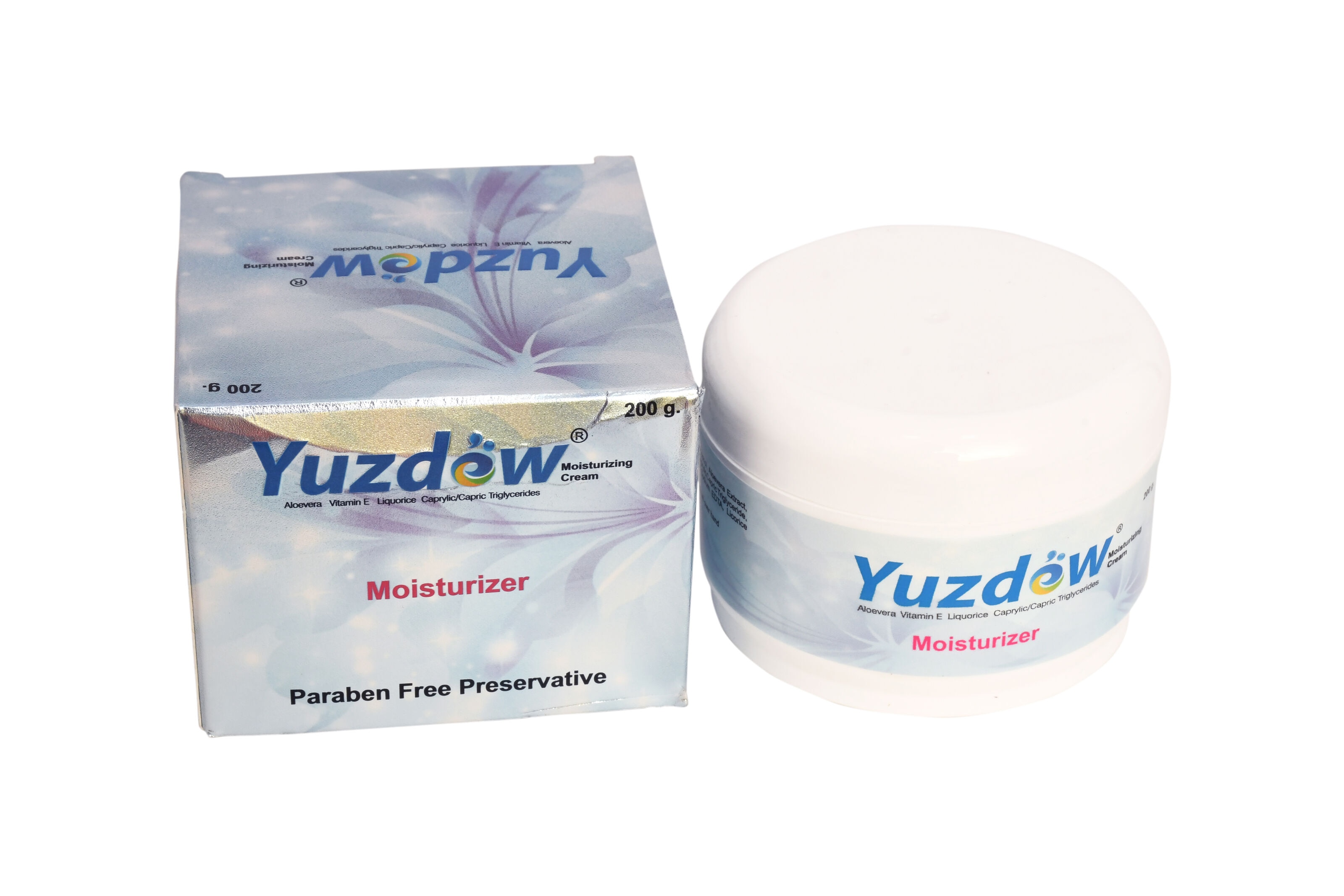 | Skin Care ₹299 Medicated soaps and acne treatments can sometimes be drying. This cream is the “shield” that repairs and protects. View product → |
Signs the Routine Is Working—and When to Stop
Less tightness, reduced flaking and a smoother surface are early signs that the routine is helping. Comfort should improve after several days of consistent use; visible scaling and roughness often need two to four weeks.
Eczema treatment may need a prescribed anti-inflammatory as well as moisturising, so do not use cream alone to manage a worsening flare.
| Stage | What you notice | What to do |
|---|---|---|
| Early improvement | Less itch, stinging and tightness; fewer flakes | Continue consistent use and reapply after washing |
| No improvement after 2–4 weeks | Cracking, roughness or itch remains unchanged | Reassess the texture, ingredients and application frequency; choose a different product |
| Immediate reaction | Burning, swelling, hives or rapidly increasing redness | Stop the product and wash it off |
| Persistent or worsening rash | Oozing, blisters, warmth, pain or spreading redness | Seek medical advice promptly |
Stop a product if burning lasts beyond a few minutes, redness increases with each application or the skin develops a new itchy rash. Fragrance-free is a sensible choice for reactive skin, but it does not guarantee zero reactions; preservatives, botanical extracts, lanolin derivatives, propylene glycol and emulsifiers can trigger allergic contact dermatitis.
Use patch testing on a small area for several days before applying a new formula widely, but seek medical advice for facial swelling, breathing difficulty, infection signs or symptoms that persist after stopping.
Frequently asked questions
What is the skin barrier?
The skin barrier is the stratum corneum, the outermost epidermal layer. Corneocytes, intercellular lipids, and natural moisturising factors help retain water and limit irritant entry.
How should you apply moisturiser to dry skin?
Wash with lukewarm water, pat without rubbing, and apply moisturiser while the skin remains slightly damp. Reapply after washing and whenever dryness returns.
Which moisturiser texture is best for dry skin?
Creams and ointments provide more barrier support than lotions because they contain more oil and occlusive ingredients. Select a lighter lotion for mild dryness or areas where greasiness is a concern.
How can you tell whether a moisturiser is working?
Reduced tightness, flaking, roughness, and stinging indicate improvement. Stop using the product if it causes persistent burning, swelling, a spreading rash, or worsening irritation.